On a cold January morning in 1785, two men climbed into a wicker basket on the cliffs of Dover and did something no one had ever managed before: they flew across open water and lived to tell about it. The first balloon crossing of the English Channel lasted less than three hours, but it settled a fierce rivalry, nearly ended in disaster, and proved that lighter-than-air flight could conquer more than a park or a pasture. At Wicked Balloons, we spend our mornings chasing sunrises over the Massachusetts countryside, and we never tire of stories about the pilots who came before us and pushed ballooning into places no one thought it could go.
Setting the Stage: Ballooning’s Frantic Early Years
The Montgolfier brothers had launched the first manned hot air balloon flight in France in November 1783. Within months, ballooning became a Europe-wide sensation, and inventors, showmen, and scientists raced to claim the next milestone. Crossing the English Channel by air was an obvious and irresistible target. It was the narrowest stretch of water separating two nations, visible from both shores on a clear day, yet no vessel of any kind had ever carried a person over it without touching the surface.
Two men in particular wanted the honor badly enough to turn it into a personal contest.
Jean-Pierre Blanchard and the Race for the Channel
Jean-Pierre Blanchard was a French inventor already known for his balloon ascents around Paris. He was determined to be the first to fly across the Channel, and other aeronauts of the day had their eye on the same prize. Blanchard moved quickly to assemble a balloon and a plan, but he needed money, and an American physician living in London was ready to help fund the attempt.
That physician was Dr. John Jeffries, a Boston-born doctor living in London. Jeffries paid for the balloon and insisted on flying alongside Blanchard, a condition Blanchard reportedly resisted at first. In the end, the two men agreed to fly together, and their partnership became essential to the flight’s success.
January 7, 1785: Liftoff from Dover
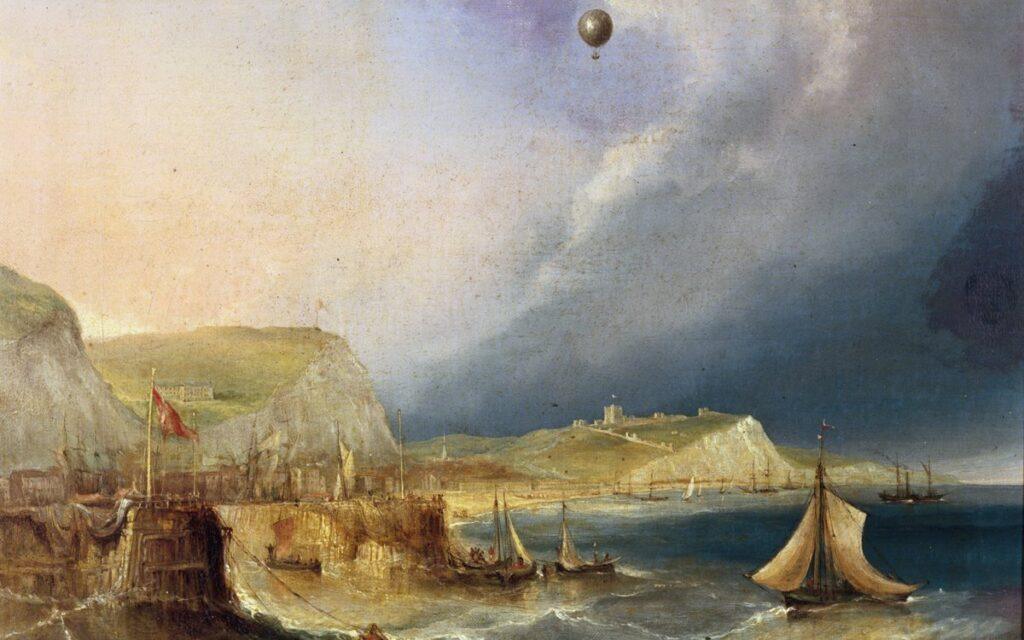
On January 7, 1785, Blanchard and Jeffries launched from the cliffs near Dover Castle in a hydrogen balloon, aiming for the coast of France. It was the kind of blustery, uncertain day that any balloon pilot today would study closely before deciding whether to fly. Winds over open water carry no guarantees, and the two men had committed themselves to a crossing with no safe place to land if something went wrong halfway across.
A Near Disaster Over Open Water
Something did go wrong. Partway across the Channel, the balloon began losing altitude and appeared at real risk of dropping into the sea. Blanchard and Jeffries did what any balloonist would recognize as the last resort: they started throwing overboard everything they could spare to lighten the load.
- Sand ballast went first, as it always does
- Books, instruments, and spare equipment followed
- According to accounts of the flight, the two aeronauts eventually shed articles of their own clothing to stay aloft
The measures worked. The balloon climbed just enough to clear the French coastline near Calais, and Blanchard and Jeffries touched down safely in the Felmores Forest, having completed the first balloon crossing of the English Channel in a flight of roughly two and a half hours. They arrived cold, lightened of nearly everything they’d brought, and instantly famous.
Why the First Balloon Crossing of the English Channel Mattered
The flight did more than settle a rivalry. It proved that a balloon could carry people over a real geographic barrier, not just drift above familiar ground with a safe landing always within reach. Blanchard’s Channel crossing became one of the defining achievements of ballooning’s first decade, alongside the earliest ascents themselves, and it cemented his reputation as one of the era’s most daring aeronauts. He went on to make balloon flights across Europe and eventually in the United States, carrying the same restless ambition that got him across the Channel in the first place.
Jeffries, for his part, returned to Boston something of a celebrity, having played a hand in one of the most talked-about feats of the age. It is a small point of pride for those of us flying balloons in Massachusetts today that an American physician was strapped into the basket for aviation’s first great water crossing.
What Blanchard’s Flight Still Teaches Balloon Pilots
Modern hot air balloons and hydrogen gas balloons behave differently in a lot of respects, but the fundamentals Blanchard and Jeffries wrestled with over the Channel are still exactly what every pilot manages on every flight: weight, lift, and wind. Ballast, payload, and altitude are still a running conversation in the basket, even if today’s instruments make that conversation far more precise than anything available in 1785. Reading the wind before you ever leave the ground is still the difference between a smooth flight and a scramble. If you would like to see those same principles at work firsthand, and in far less dramatic circumstances, we would love to have you join us for one of our sunrise balloon rides over New England.
To learn more about our crew and how our own passion for ballooning connects back to this long history of flight, take a look at our story.
Frequently Asked Questions
Who made the first balloon crossing of the English Channel?
Jean-Pierre Blanchard, a French inventor, and Dr. John Jeffries, an American physician living in London, made the crossing together on January 7, 1785, flying from Dover to the coast of France.
How long did the first Channel balloon crossing take?
The flight took roughly two and a half hours, a short but harrowing trip that nearly ended with the balloon dropping into the sea partway across.
What kind of balloon did they use?
Blanchard and Jeffries flew a hydrogen-filled balloon, the gas-lift technology of choice for many early aeronauts, distinct from the hot air balloons the Montgolfier brothers had pioneered a year earlier.
Did anything go wrong during the flight?
Yes. The balloon lost altitude over open water, and the two men had to throw ballast, equipment, and even some of their own clothing overboard to stay aloft long enough to reach the French coast.
More than two centuries later, the sight of a balloon rising into the morning sky still carries a trace of that same spirit of adventure. We think Blanchard and Jeffries would be glad to know it.