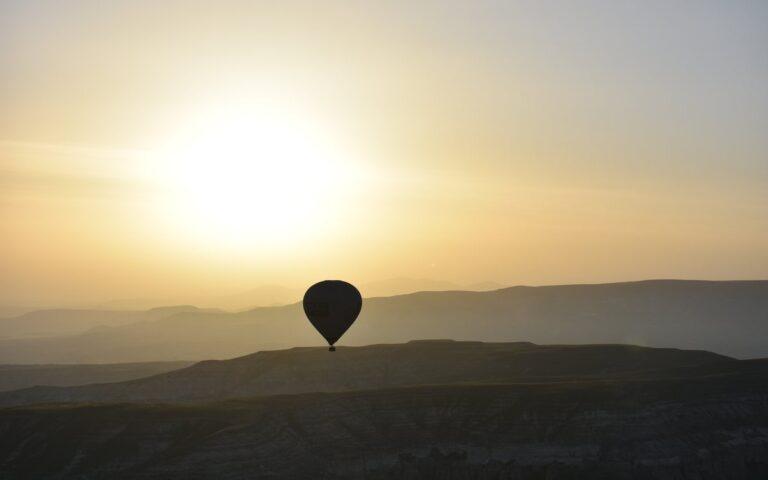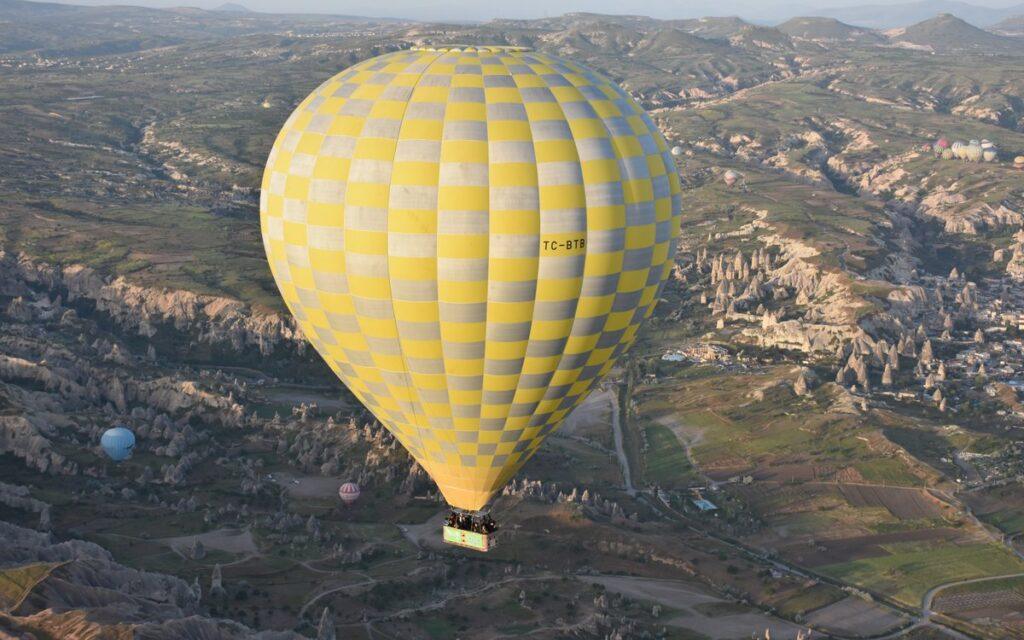
Long before satellites and jet engines, people were already chasing hot air balloon world records, betting everything on wind, altitude, and nerve. From the first hop off a French field in 1783 to solo laps around the entire planet, ballooning has always attracted dreamers willing to risk a very long fall for a very good story. At Wicked Balloons, we fly sunrise rides over Massachusetts rather than attempt anything death-defying, but we love these tales, and they remind us why this quiet, ancient way of flying still feels so wild.
The Records That Started It All
Ballooning’s record-setting streak began almost immediately. In 1783, the Montgolfier brothers launched the first untethered hot air balloon flight carrying passengers over Paris, and within the same year, Jean-François Pilâtre de Rozier and the Marquis d’Arlandes became the first humans to fly free in the sky. Every hot air balloon world record since then has, in some sense, been chasing that original burst of astonishment.
For most of the next two centuries, ballooning stayed a niche pursuit for scientists and showmen. That changed dramatically in the 1970s and 1980s, when a new generation of aeronauts turned long-distance and altitude flying into a genuine sport, complete with sponsors, support crews, and headlines.
Crossing Oceans by Balloon
Few achievements capture the romance of ballooning like an ocean crossing. In 1978, the Double Eagle II, piloted by Ben Abruzzo, Maxie Anderson, and Larry Newman, became the first balloon to cross the Atlantic Ocean successfully, landing in France after days adrift on the jet stream with barely any fuel to spare. It was a landmark moment that proved a balloon could travel enormous distances if the pilots understood the wind well enough to ride it.
The Pacific proved even tougher. Ben Abruzzo returned in 1981 with a team that completed the first transpacific balloon flight aboard the Double Eagle V, flying from Japan to California. A few years later, adventurers Richard Branson and Per Lindstrand pushed the envelope further still, crossing both the Atlantic and later the Pacific in the Virgin Atlantic Flyer and Virgin Otsuka Pacific Flyer, setting distance and speed marks along the way.
Circling the Globe
The ultimate long-distance prize, though, was a nonstop trip around the world. That fell to Bertrand Piccard and Brian Jones, who completed the first nonstop circumnavigation of the globe by balloon in March 1999 aboard the Breitling Orbiter 3, launching from Switzerland and landing in Egypt after nearly three weeks aloft. A few years later, American adventurer Steve Fossett went one further, completing the first solo nonstop circumnavigation of the globe by balloon in 2002 in the Spirit of Freedom, after several earlier attempts that had ended in the ocean.
Reaching for the Sky: Altitude Records
Not every hot air balloon world record is about distance. Some of the most jaw-dropping feats involve altitude, where pilots wear pressure suits and battle temperatures that would frost over most aircraft windows. Indian balloonist Vijaypat Singhania set a hot air balloon altitude record in 2005, climbing far higher than commercial jets typically cruise, in a specially built envelope designed to survive the thin, brutally cold air at the edge of the stratosphere.
These flights aren’t stunts for their own sake. Every altitude attempt teaches balloon builders something new about materials, burner efficiency, and how gas expands and contracts across huge swings in temperature and pressure. Some of that same thinking, on a much smaller scale, shapes how modern envelopes are designed and flown safely today.
Big, Strange, and Wonderful Shapes
Not all balloon records are about going far or high. Some are about going big, or simply going strange. Special-shape balloons, envelopes built to look like everything from cartoon characters to giant sneakers, have become a beloved category at festivals like the Albuquerque International Balloon Fiesta, the largest gathering of hot air balloons in the world. Builders compete to create the most technically impressive and visually delightful shapes each year, and the category keeps growing more inventive.
It’s a tradition Wicked Balloons feels a special kinship with. Building custom special-shape and advertising balloons is part of our own craft, and every one we’ve built has taught us something about how far a balloon envelope can be pushed while still flying beautifully. You can read more about that side of our work, along with our sunrise rides and film and television projects, on our about page.
A Few Records Worth Knowing
- First free flight: Pilâtre de Rozier and the Marquis d’Arlandes, Paris, 1783.
- First transatlantic balloon crossing: Double Eagle II, 1978.
- First nonstop circumnavigation: Bertrand Piccard and Brian Jones, Breitling Orbiter 3, 1999.
- First solo nonstop circumnavigation: Steve Fossett, Spirit of Freedom, 2002.
- Largest balloon gathering: Albuquerque International Balloon Fiesta, held annually in New Mexico.
What These Records Mean for Everyday Flying
You don’t need to cross an ocean to appreciate what makes ballooning special. Every record-setting flight, no matter how extreme, comes back to the same fundamentals we rely on for a calm sunrise flight over Worcester: reading the wind, respecting the weather, and trusting a craft that has been quietly evolving since 1783. If those stories have you itching to feel that lift for yourself, our balloon rides are a wonderful, far gentler way to get a taste of what has captivated aeronauts for centuries.
Frequently Asked Questions
What is the most famous hot air balloon world record?
Many people would point to the first nonstop circumnavigation of the globe, completed by Bertrand Piccard and Brian Jones in 1999, as the record that captured the public imagination most. It combined endurance, technology, and old-fashioned adventure in a way few flights before it had.
How high can a hot air balloon actually fly?
Specially engineered balloons built for altitude attempts have flown far higher than commercial airplanes cruise, using pressurized capsules or suits and materials designed for extreme cold. Recreational balloons, including the ones we fly, stay at much more modest and comfortable altitudes.
Are hot air balloons still setting records today?
Yes. Pilots and engineers continue to push distance, altitude, and duration records, and balloon builders keep experimenting with new shapes and techniques, especially at major festivals where special-shape balloons draw crowds every year.
Do I need any experience to go on a hot air balloon ride?
Not at all. A sunrise ride is calm, safe, and requires no special skills or preparation. It is simply a beautiful, low-key way to experience flight, quite different from the record-chasing adventures described here.
Whether you’re drawn to the record books or just want to watch the ground fall away for the first time, ballooning has a way of making the sky feel a little more possible. We’d love to have you join us for a flight of your own.