The first time a guest asks us this at a holiday party, we can see the surprise on their face when we say yes: hot air balloon rides in winter are not only possible, they are often some of the smoothest, clearest flights of the year. Here in Worcester and across New England, our winter mornings regularly deliver the kind of still, cold air that pilots dream about. The balloon doesn’t mind the chill one bit — in fact, it flies better because of it.
If you’ve only ever pictured hot air balloons drifting over summer fields, it’s worth understanding why winter flying works so well, what makes it different, and what to expect if you book a flight between now and early spring.
Why Cold Air Actually Helps a Hot Air Balloon Fly
A hot air balloon flies because the air inside the envelope is heated well above the temperature of the air outside it, making the balloon lighter than the surrounding atmosphere. The bigger that temperature difference, the more lift you get for the same amount of propane.
Cold air is denser than warm air, which means a balloon flying on a crisp 30-degree morning generates noticeably more lift than the same balloon on a hazy 85-degree July afternoon. Pilots often need less burner time to launch and maintain altitude in winter, which can make for a quieter, gentler ride overall. This is one of the quiet reasons experienced pilots look forward to the season rather than dreading it.
What Makes Hot Air Balloon Rides in Winter Different
Flying conditions change with the seasons, and winter brings its own rhythm:
- Calmer air at sunrise. Winter mornings frequently have the kind of light, steady wind that ballooning depends on, with less of the thermal turbulence that builds up on hot summer afternoons.
- Crystal-clear visibility. Cold, dry air holds less haze than humid summer air, so the views over the hills and river valleys of central Massachusetts tend to stretch farther.
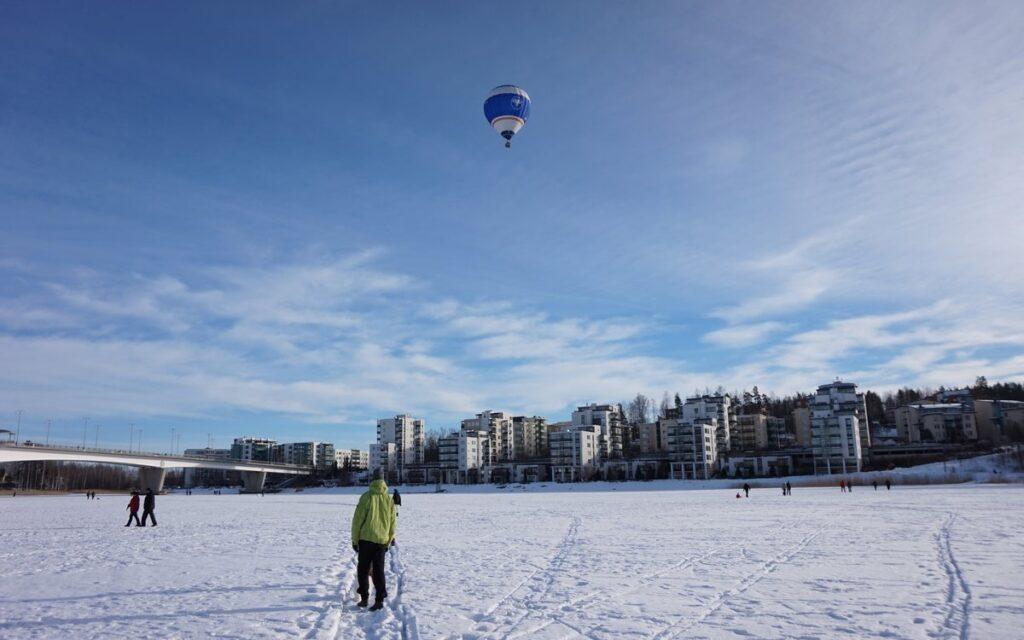
- Frost-dusted scenery. Fields, stone walls, and bare tree lines take on a completely different character under a coat of frost or a light snow, especially as the sun comes up.
- Shorter flight windows. Because winter days are shorter and temperatures shift more quickly after sunrise, flights are scheduled tightly around dawn to catch the best conditions.
Dressing for a Winter Balloon Flight
Passengers are sometimes surprised to learn that flying in cold weather feels less bracing than standing on the ground. Because the balloon moves with the wind rather than against it, you rarely feel a stinging breeze in flight the way you would standing still in the same conditions. That said, dressing in warm layers is still the right call, particularly for the chase and landing, when you’re back on solid ground waiting for retrieval.
What We Recommend Bringing
- A warm base layer plus an insulated jacket
- Gloves and a hat, since hands and ears feel cold first
- Sturdy, warm boots for standing in a frosty field
- Hand warmers, if you tend to run cold
Is It Safe to Fly a Hot Air Balloon in Winter?
Safety is the same top priority in January as it is in July. Our pilots hold the same FAA certification and follow the same pre-flight weather checks year-round, evaluating wind speed, visibility, cloud ceiling, and precipitation before every launch. Winter simply shifts which conditions we’re watching most closely: instead of afternoon thunderstorms, we’re watching for approaching fronts, fog, and the chance of snow. When conditions line up, a winter launch can be just as calm and controlled as a summer one, often more so.
As with any season, flights are scheduled around the forecast rather than the calendar, and we would rather reschedule a flight than launch into marginal weather.
A Brief Nod to Ballooning History
Hot air ballooning has never been strictly a warm-weather pursuit. The very first hot air balloon flight carrying passengers, launched by the Montgolfier brothers in France in 1783, took place in the fall, and balloonists have chased good flying weather across every season since. Cold-air advantage isn’t a modern discovery; it’s part of why balloonists have long favored the still, dense air of early morning, whatever the month.
Booking Your Winter Flight
Because winter mornings can be some of the most reliable flying conditions of the year, many of our regular guests specifically request a winter date, especially for anniversaries, proposals, and milestone birthdays when they want dramatic, uncrowded scenery. If you’ve been curious about experiencing sunrise from a basket over the snow-dusted hills of central Massachusetts, our sunrise balloon rides run throughout the colder months whenever the weather cooperates, and our team will work with you to find a morning that fits both the forecast and your schedule.
Frequently Asked Questions
Do hot air balloons fly in the snow?
Balloons don’t launch during active snowfall or in low visibility, but a calm, clear morning after a snowstorm is often an ideal time to fly. The snow-covered landscape below makes for some of the most striking views of the year.
How cold does it get inside the balloon basket?
The basket itself isn’t heated, so passengers dress for the outdoor temperature. However, because the balloon travels with the wind rather than against it, flying rarely feels as cold as standing still in the same weather, and the burner periodically adds a welcome blast of warmth overhead.
Is winter a good time to book a balloon ride?
Many pilots consider it one of the best times. Denser cold air improves lift, mornings tend to be calmer, and the visibility on clear winter days is often better than in the hazier summer months.
What happens if my winter flight gets weathered out?
Winter weather can be more changeable day to day, so flexibility helps. If conditions aren’t safe for launch, we’ll work with you to reschedule for the next suitable morning rather than fly in anything less than ideal conditions.
Winter ballooning rewards a little flexibility with some of the calmest air and clearest views of the year. If a sunrise flight over a frosted New England landscape sounds like your kind of morning, we’d love to help you find the right date.