If you have never floated silently above the treetops at sunrise, it is hard to picture what a balloon ride actually feels like. Knowing what to expect on your first hot air balloon ride can turn pre-flight jitters into pure anticipation, and it helps you show up dressed right, relaxed, and ready to enjoy every minute. Here at Wicked Balloons, we launch sunrise flights across New England, and we walk every first-time flyer through the same easy, low-stress process. This guide covers exactly what that process looks like from the moment you arrive to the moment your feet touch back down.
Before Dawn: Why Balloon Rides Launch So Early
Hot air balloons fly at sunrise (and sometimes near sunset) because that is when the air is calmest. As the sun climbs higher and warms the ground unevenly, thermals and gusty wind develop, which is why commercial balloon flights almost never happen in the middle of the day. Expect an early alarm and a meeting time roughly an hour before sunrise.
Your pilot will check conditions the morning of the flight, and sometimes the night before, looking at wind speed, visibility, and precipitation. Ballooning depends entirely on cooperative weather, so flights occasionally get postponed or rescheduled. This is normal and is your pilot prioritizing safety over sticking to a schedule.
What to Expect on Your First Hot Air Balloon Ride: The Launch
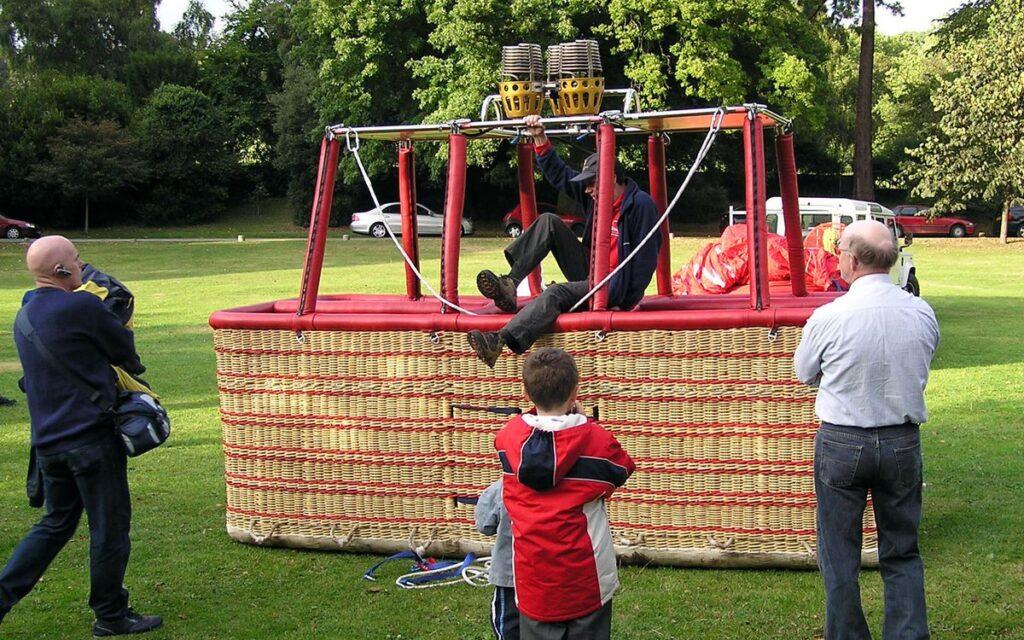
Once you arrive at the designated meet-up spot, the crew chooses a launch field based on wind direction that morning. You will help unload the equipment, and many pilots invite passengers to lend a hand as the balloon envelope is unrolled and connected to the wicker basket.
A large fan first pushes cool air into the envelope, and then the pilot uses controlled bursts from the propane burners to heat that air until the balloon slowly rises upright. It is a genuinely fun spectacle to watch up close, since a balloon that was flat on the grass minutes earlier suddenly stands thirty feet tall or more above the basket. This inflation sequence usually takes about fifteen to twenty minutes.
Liftoff and What the Flight Itself Feels Like
The most common surprise for new passengers is how gentle liftoff feels. There is no jolt, no stomach-drop sensation like an elevator or airplane takeoff. Because the balloon moves with the wind rather than against it, you generally do not feel wind on your face once airborne, even though you are drifting along at whatever speed the breeze is moving.
Once aloft, the ride is remarkably quiet except for the occasional roar of the burner. Many passengers describe it as more peaceful than they expected, with sweeping views of the New England countryside opening up as the balloon climbs. A typical flight lasts about an hour, drifting wherever the wind currents that morning happen to carry you.
A few practical notes for the flight itself:
- Dress in layers and wear closed-toe shoes; mornings in the basket can be cool before the sun is fully up.
- Cameras and phones are welcome, but keep straps secured since you will be standing for the whole flight.
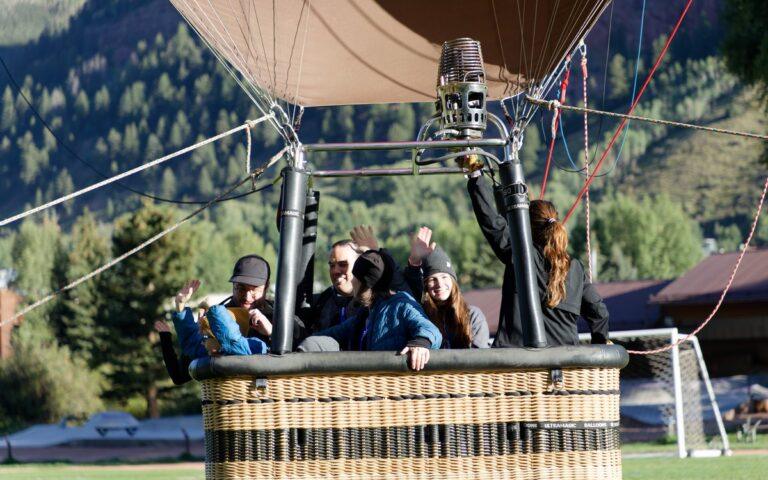
- The basket has no seats, so passengers stand and can move around to see different views.
- Height is rarely an issue for the queasy stomach that heights sometimes cause, because there is no sensation of speed or edge the way a tall building or cliff can produce.
The Landing and the Tradition That Follows
Landings vary from a smooth, single-bounce touchdown to a slightly livelier bump, depending on wind conditions at ground level. Your pilot will brief you on the proper landing position, knees bent, holding the interior straps, right before descent. The chase crew tracks the balloon by vehicle the entire flight and meets you at the landing site to help pack everything back up.
Ballooning carries a champagne toast tradition dating back to the earliest days of flight in France, and many operators, including us, carry on that custom (with sparkling cider or juice available for anyone who prefers it) along with a short, informal certificate marking your first flight.
A Brief Word on Ballooning’s History
Hot air ballooning is the oldest form of human flight. The Montgolfier brothers demonstrated the first untethered flight carrying passengers in 1783 in France, decades before airplanes existed. Modern sport balloons still work on the same basic principle those brothers proved over two centuries ago: heated air is lighter than the surrounding cool air, so the balloon rises. It is a small thrill to know that when you lift off, you are taking part in one of the oldest continuous traditions in aviation.
Frequently Asked Questions
Is a hot air balloon ride scary?
Most first-time flyers say it feels calmer than they expected. There is no acceleration sensation at liftoff, no wind rushing past since you move with the air, and the basket sits at a comfortable standing height with sturdy sides.
What should I wear on a balloon ride?
Dress in layers you can remove as the morning warms up, and wear closed-toe shoes for standing in the basket and walking through the launch and landing fields, which are often grassy or uneven.
How long does the whole experience take?
Plan for two to three hours total. The flight itself typically runs about an hour, but you should budget time for inflation, the drive to the launch site, and the landing and pack-up afterward.
What happens if the weather does not cooperate?
Your pilot will reschedule rather than fly in unsafe conditions. This is standard practice across the industry and is part of what makes ballooning such a consistently safe way to fly.
Knowing what to expect on your first hot air balloon ride takes away the guesswork and leaves room for what actually matters: watching the sun come up over New England from somewhere you have probably never seen it before. If that sounds like your kind of morning, you can check available dates and book your flight through our reservations page whenever you are ready.