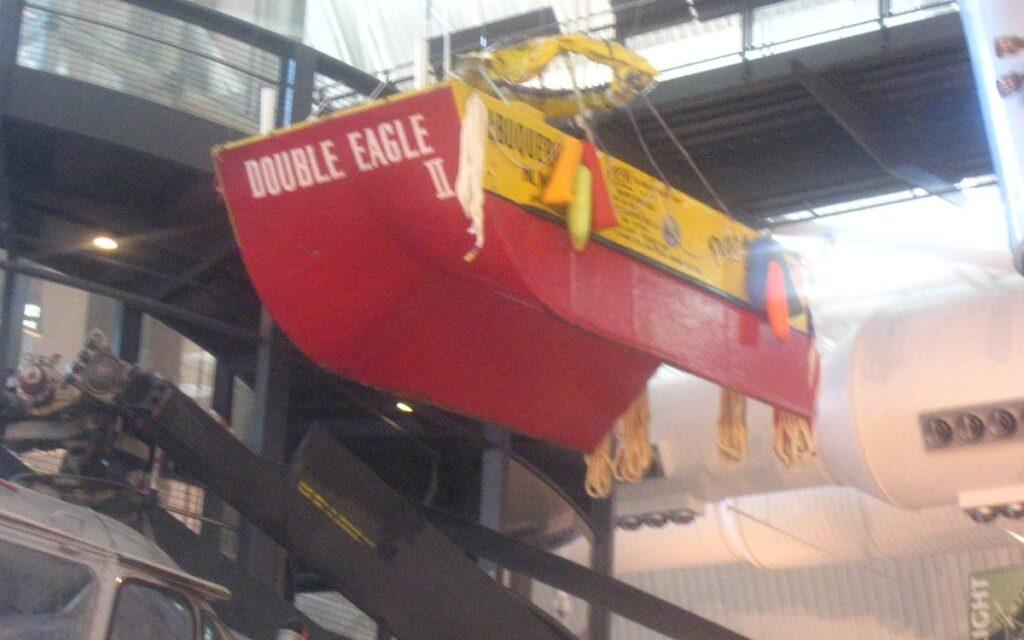
On the morning of August 17, 1978, a battered silver gas balloon settled into a barley field outside Paris, and with that gentle bump, the Double Eagle II Atlantic crossing became the first successful nonstop balloon flight across the ocean. For more than a century, aeronauts had tried and failed, some paying with their lives. Watching that dented gondola touch down in France, you understand why this story still gives balloon pilots chills nearly fifty years later.
At Wicked Balloons, we spend our mornings drifting quietly over the hills of Central Massachusetts, and every flight we fly owes something to the pioneers who proved that lighter-than-air travel could go the distance. Few flights proved it more dramatically than this one.
A Long History of Failed Attempts
Long before 1978, balloonists dreamed of crossing the Atlantic. Beginning in the 1950s and continuing through the following two decades, more than a dozen serious attempts were made, and several ended in tragedy or near-disaster. Balloons were blown off course, envelopes failed in violent weather, and crews ditched at sea and had to be rescued. The Atlantic earned a grim reputation among gas balloonists as an obstacle that simply could not be beaten.
That reputation made the eventual success of the Double Eagle II atlantic crossing all the more remarkable. The team behind it understood exactly what had gone wrong for everyone before them, and they built their flight plan around those hard lessons.
Meet the Crew of the Double Eagle II
The flight was piloted by three Albuquerque, New Mexico businessmen and ballooning enthusiasts:
- Ben Abruzzo, an experienced balloonist who had already survived a failed transatlantic attempt the year before
- Maxie Anderson, who flew alongside Abruzzo on that earlier attempt and helped refine the strategy for a second try
- Larry Newman, a hang-gliding champion and balloon pilot who joined the team for the 1978 flight
Their earlier attempt, in the balloon Double Eagle, had ended when the crew was forced to ditch in the ocean off Iceland. Rather than give up, Abruzzo and Anderson studied what had gone wrong, refined their equipment, and came back a year later with a stronger, better-provisioned balloon and an additional pilot.
Launch from Presque Isle, Maine
Double Eagle II lifted off from Presque Isle, Maine, carrying a helium envelope, a small enclosed gondola, and enough ballast and supplies to sustain the crew through several days aloft. Unlike a hot air balloon, which needs burners firing frequently to maintain altitude, a gas balloon like Double Eagle II relies on the buoyancy of its lifting gas and careful management of ballast to rise and descend, a difference that made the long, sustained flight across open ocean possible in the first place.
The crew faced brutal cold at altitude, cramped quarters, and the psychological weight of knowing that a serious equipment failure over open water would leave little room for rescue. They pressed on regardless, riding the prevailing winds eastward across the Atlantic.
Six Days Over the Ocean
The flight lasted roughly 137 hours, just under six days, as the balloon drifted across the North Atlantic and into Western Europe. The crew rationed supplies, monitored their dwindling ballast, and navigated using the winds available to them at different altitudes, since a gas balloon has no direct steering, only the ability to rise or descend into air moving in a more favorable direction.
When Double Eagle II finally crossed the coast of France, it became clear that the long-sought goal was within reach. The balloon touched down in a barley field near Miserey, not far from Paris, to a jubilant welcome from the French public and international press. The successful Double Eagle II Atlantic crossing was front-page news around the world, celebrated as a landmark in the history of flight.
Why the Flight Still Matters
The achievement did more than settle a long-standing challenge. It reignited public fascination with ballooning at a moment when the sport had settled into a quieter, more niche existence. Crowds that had never given gas or hot air balloons a second thought suddenly wanted to know how these graceful, engine-less craft worked, and a new generation of pilots and enthusiasts took up the sport in the years that followed.
That renewed enthusiasm is part of the same lineage that eventually brought hot air ballooning to backyards and open fields across New England, including right here in Worcester. Every sunrise flight we fly carries a little of that same spirit of quiet, wind-borne adventure that carried three pilots across an ocean. If you would like to learn more about our crew, our balloons, and the passion behind our flights, visit our about page to read our story.
Frequently Asked Questions
How long did the Double Eagle II Atlantic crossing take?
The flight took approximately 137 hours, just under six days, from launch in Presque Isle, Maine, to landing near Paris, France.
Who piloted Double Eagle II?
The crew consisted of Ben Abruzzo, Maxie Anderson, and Larry Newman, all experienced balloonists and adventurers from the Albuquerque, New Mexico area.
What type of balloon was Double Eagle II?
It was a helium gas balloon, a different design from the hot air balloons most people picture today. Gas balloons rise and fall using ballast and gas venting rather than a burner, which allowed the crew to stay aloft for days at a time.
Was this the first attempt to cross the Atlantic by balloon?
No. Numerous attempts were made in the decades before 1978, including an earlier effort by Abruzzo and Anderson that ended in a ditching near Iceland. Double Eagle II was the flight that finally succeeded.
Stories like the Double Eagle II Atlantic crossing remind us why so many of us fell in love with ballooning in the first place: the quiet, the patience, and the sheer nerve it takes to trust the wind. We would love to share that feeling with you on one of our own sunrise flights over New England.