If you have ever wondered who invented the modern hot air balloon, the answer is not the Montgolfier brothers of 18th-century France, though they get plenty of credit for the original idea. The real answer is an unassuming Nebraska farm boy turned engineer named Ed Yost, whose work in the 1950s and 60s turned an 18th-century curiosity into the sport and industry we know today, the same one that gets our own Wicked Balloons crews airborne over Worcester County every calm morning.
It’s a story worth telling, because almost everything a modern balloon pilot touches, from the burner to the fabric to the basket, traces back to one man’s stubborn tinkering in a workshop far from any coast or capital.
Before Yost: Balloons That Couldn’t Last
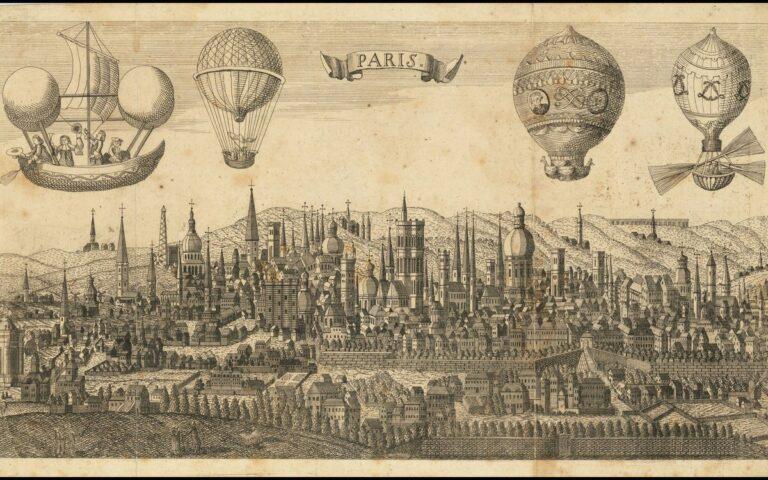
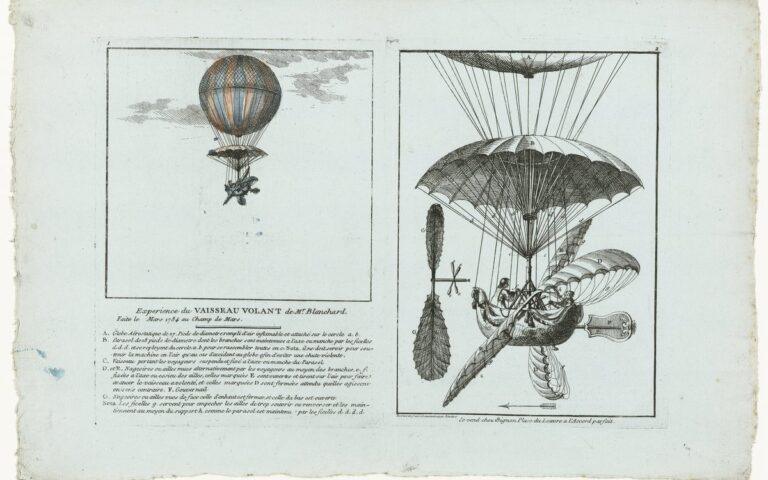
Hot air ballooning began in 1783, when Joseph-Michel and Jacques-Étienne Montgolfier launched the first untethered flight carrying passengers over Paris. It was a sensation, and it proved that humans could fly. But the Montgolfier design and its many imitators over the following century had a fatal limitation: there was no practical way to carry enough heat aloft to sustain a flight. Balloons either burned fuel dangerously close to fragile paper or cloth envelopes, or they simply cooled and descended within minutes.
For nearly two centuries afterward, gas balloons filled with hydrogen or coal gas dominated the skies. Hot air ballooning, as a sustained, controllable form of flight, essentially went dormant. It took the mid-20th century, and a very different kind of experimentation, to bring it back.
Who Invented the Modern Hot Air Balloon
Paul Edward “Ed” Yost was born in 1919 in Bristow, Iowa, and grew up with an engineer’s curiosity and a pilot’s restlessness. After working on early experimental balloon projects for the U.S. Navy and General Mills in the 1950s, including high-altitude research balloons, Yost turned his attention to a much older problem: could a hot air balloon actually fly for a useful length of time?
His breakthrough came from combining three ideas that, together, solved the Montgolfiers’ original problem:
- A lightweight, synthetic envelope made of nylon, which was far stronger and lighter than the paper and cloth used in the 1780s
- A propane burner that could be reignited and controlled in flight, giving the pilot the ability to add heat on demand instead of relying on one fire that slowly died
- An open basket suspended below, keeping the fuel and flame safely separated from the envelope
Working with a small team at Raven Industries in Sioux Falls, South Dakota, Yost built and flew a balloon of his own design on October 22, 1960, near Bruning, Nebraska. That flight is widely recognized as the birth of the modern hot air balloon, the direct ancestor of every balloon flying today, including the ones in our own fleet.
From Prototype to a Global Sport
Yost did not stop at one successful flight. Through the 1960s he kept refining the burner system, the envelope shape, and the materials, turning a working prototype into a reliable, repeatable aircraft. He is credited with numerous “firsts” in the sport, including early long-distance and transatlantic gas balloon attempts, and he spent decades afterward building balloons, training pilots, and mentoring the generation of manufacturers and aeronauts who commercialized the hobby in the 1970s.
By the time recreational and commercial hot air ballooning took off in the United States and Europe, Yost’s basic formula, propane burner, nylon envelope, wicker or composite basket, had become the industry standard. It is essentially unchanged today. Modern envelopes are more sophisticated, burners are more powerful and efficient, and instrumentation has improved enormously, but the underlying architecture is still the one Yost proved out over the Nebraska plains.
Why This Matters to Every Pilot Today
Every time a Wicked Balloons pilot fires a burner over the Worcester hills at sunrise, they are using a direct descendant of Yost’s original design. The rhythmic roar of propane, the nylon envelope overhead, the basket underfoot: none of it existed in a usable form until Yost put it together. Understanding that history gives a deeper appreciation for what is actually happening beneath the envelope on a calm morning flight.
A Legacy That Still Flies
Ed Yost continued flying, building, and innovating for decades, and he remained an active and respected figure in the ballooning world until his death in 2007. He is remembered by the sport’s governing bodies and enthusiasts alike as the person who, more than anyone else, answered the question of who invented the modern hot air balloon. His fingerprints are on the propane burner, the envelope construction, and the entire philosophy of controlled, sustained hot air flight that makes today’s rides possible.
It is a piece of aviation history that many riders never hear about, which is part of why our crew loves sharing it. To learn more about our team’s own approach to flying and how we carry that tradition forward, visit our About page to meet the people behind Wicked Balloons.
Frequently Asked Questions
Who invented the modern hot air balloon?
Ed Yost, an American engineer working with Raven Industries, is credited with inventing the modern hot air balloon. His October 22, 1960 flight near Bruning, Nebraska, using a propane burner and nylon envelope of his own design, established the basic architecture still used in hot air balloons today.
How is Yost’s design different from the Montgolfier brothers’ original balloon?
The Montgolfier brothers proved in 1783 that hot air could lift people off the ground, but their balloons had no practical way to add heat during flight, so they could only stay aloft briefly. Yost’s design added a controllable propane burner and a durable nylon envelope, allowing pilots to sustain and control flight for much longer periods.
Did Ed Yost fly balloons himself after his invention?
Yes. Yost remained an active pilot, builder, and innovator for decades after his 1960 flight, continuing to refine burner and envelope technology and taking part in long-distance and record-setting flight attempts throughout his career.
Is the same basic balloon design still used today?
Yes. Modern hot air balloons still rely on the same core combination Yost developed: a propane burner, a lightweight synthetic envelope, and a suspended basket. Materials and instruments have improved, but the fundamental design has remained consistent since the 1960s.
The next time you watch a balloon rise into a pink New England sky, you’re watching Ed Yost’s idea in action. If you would like to experience that piece of living history for yourself, take a look at our sunrise rides and come see it firsthand.