Every sunrise flight you see drifting over the Worcester hills is only half the story. The other half is happening down on the ground, where a hot air balloon chase crew is tracking the wind, reading back roads, and getting into position long before the balloon ever touches down. Without that crew, a balloon ride would be a one-way trip with no way home.
At Wicked Balloons, our pilots get plenty of attention, and rightly so. But the people driving the chase vehicle, watching the sky, and packing away hundreds of pounds of envelope and basket at the end of a flight deserve just as much credit. Here’s a look at who they are, what they do, and why no balloon company gets off the ground without them.
What a Hot Air Balloon Chase Crew Actually Does
A chase crew’s job starts before the balloon is even inflated. While the pilot checks weather data and picks a launch site, the ground crew is loading the trailer, checking the chase vehicle, and reviewing the likely flight path based on wind direction and speed.
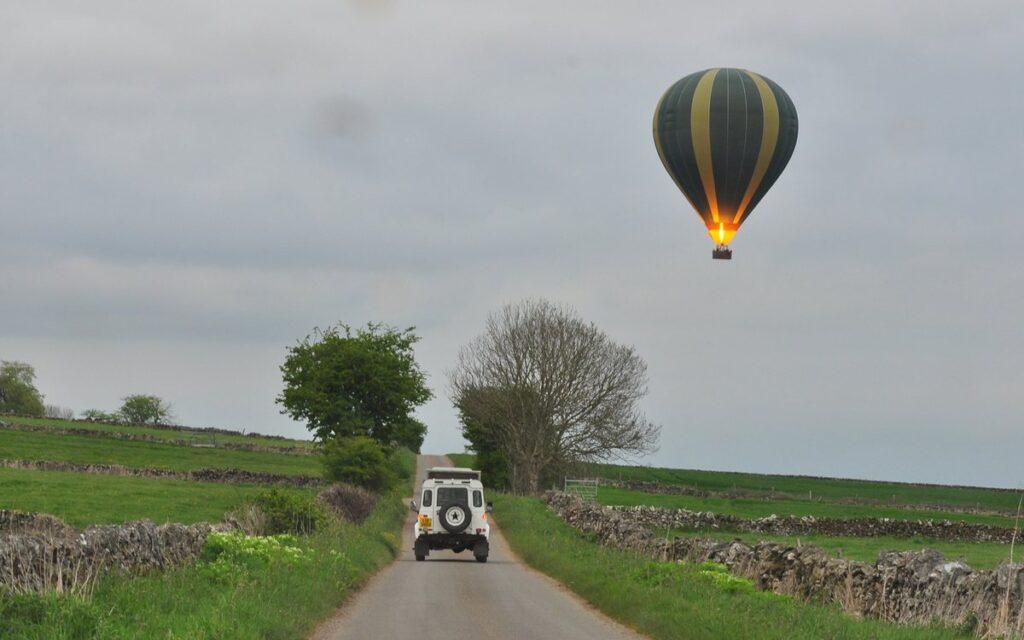
Once the balloon lifts off, the real work begins. The crew follows from the road, staying close enough to reach the balloon quickly but never trying to guess exactly where it will land. Balloons move at the whim of the wind, and a pilot may adjust altitude to catch a different air current, which changes the flight path in ways that are impossible to predict from the ground. Good crew members learn to read the balloon’s movement, anticipate turns, and keep a mental map of every farm road, cul-de-sac, and gate in the chase area.
When the pilot spots a landing spot and begins their descent, the crew’s job shifts again. They need to reach the site quickly, help secure the basket on touchdown, and often ask a landowner for permission if it’s private property. Then comes the least glamorous but most essential part of the job: deflating the envelope, packing it into its bag, breaking down the basket, and loading everything back onto the trailer.
The Skills Behind a Great Ground Crew
Chasing a balloon looks simple from the outside: follow the balloon, show up at the end, pack the gear. In practice, it takes a specific mix of skills that take real time to develop.
- Local knowledge: Crew members need to know back roads, dead ends, and which farm fields are likely to offer a safe landing spot.
- Wind reading: Understanding how wind speed and direction change at different altitudes helps a crew anticipate where the balloon is headed next.
- People skills: Landing in someone’s field means a friendly, respectful conversation is often the first order of business.
- Physical stamina: A balloon envelope can weigh several hundred pounds once packed, and folding it correctly takes practice and teamwork.
- Calm under pressure: Traffic, road closures, and last-second wind shifts are all part of a normal chase, and a good crew adapts without losing track of the balloon.
A Tradition as Old as Ballooning Itself
Ground crews have been part of ballooning since its earliest days. When the Montgolfier brothers and their contemporaries began flying manned balloons in France in the 1780s, they relied on people on horseback and on foot to follow the balloon and assist with recovery once it landed. Two centuries later, the basic idea hasn’t changed much, even though horses have been replaced by pickup trucks and radios.
What has changed is the level of coordination. Modern chase crews stay in constant radio contact with the pilot, relaying information about roads, obstacles, and wind conditions that the pilot can’t always see from altitude. That teamwork is what makes each flight safer and smoother for everyone on board.
Why Chase Crews Matter for Passengers
If you’ve ever taken one of our sunrise balloon rides, you may not have thought much about the chase crew until you landed. But they’re the reason your ride ends with a warm greeting and a helping hand out of the basket rather than a long walk back to civilization.
A skilled crew also adds a layer of safety to every flight. Because they’re in radio contact with the pilot throughout the ride, they can flag hazards like power lines or road closures near a potential landing site. They’re also often the ones handling the traditional post-flight toast, a custom with roots in ballooning’s earliest days in France, when pilots offered champagne to landowners as thanks for the use of their fields.
Could You Be Part of a Chase Crew?
Chase crew work is one of the best-kept secrets in aviation. It doesn’t require a pilot’s license, and many crew members start out simply because they love being outdoors at sunrise and enjoy the camaraderie of a small team working toward a common goal. Over time, some crew members go on to earn their own pilot certificates, using their ground experience as a foundation for understanding how wind and weather shape a flight.
If you’re curious about joining a hot air balloon chase crew, the best way in is usually showing up, asking questions, and volunteering for a launch or two. Most balloon companies, including ours, are glad to have willing hands.
Frequently Asked Questions
Do I need experience to join a chase crew?
No. Most chase crew members start with no ballooning background at all. Pilots and experienced crew are happy to teach newcomers the basics of inflation, packing, and radio communication on the job.
How does the chase crew know where the balloon will land?
They don’t know for certain until the pilot commits to a landing site. Instead, the crew tracks the balloon’s general direction and speed, stays within range, and adjusts their route continuously as the flight unfolds.
Is chase crew work dangerous?
It’s generally low-risk, though crew members do need to be comfortable with some physical activity, quick decision-making in traffic, and occasionally walking across uneven fields to reach a landing site.
Can I ride along with the chase crew instead of flying?
Some companies allow guests to observe from the chase vehicle, though this varies by flight and availability. If you have questions about a specific ride or what to expect, our frequently asked questions page covers the details we hear most often.
The next time you watch a hot air balloon glide over the Massachusetts countryside, take a moment to picture the crew below, maps in hand, eyes on the sky, already planning the best way to bring everyone home safely.