Ask ten people what they know about hot air ballooning and you’ll hear at least eight things that simply aren’t true. Hot air balloon myths have been floating around almost as long as balloons themselves, and they tend to fall into two camps: the ones that make flying sound far more dangerous than it is, and the ones that make it sound far less impressive. Having spent years launching sunrise flights over New England, we’ve heard just about every version of both. Here are nine of the most persistent myths, cleared up for good.
Myth 1: Balloons Are Steered Like Airplanes
This is probably the single most common misconception, and it’s an understandable one. A hot air balloon has no steering wheel, rudder, or throttle in the way a plane does. Pilots control altitude by adding heat with the burner or letting the air cool, and that’s it for direct input. Steering, in the sense of choosing a heading, happens by finding a layer of wind blowing in the direction you want and climbing or descending into it. Wind at 500 feet often moves differently than wind at 2,000 feet, so an experienced pilot is constantly reading conditions and adjusting altitude to work with the available breezes rather than fighting them.
Myth 2: Ballooning Is Inherently Dangerous
People sometimes picture ballooning as a daredevil activity, but commercial hot air balloon rides are among the more heavily regulated forms of aviation. Pilots hold FAA certificates specific to lighter-than-air craft, balloons undergo scheduled inspections, and flights are planned around weather windows that favor calm, stable air. Sunrise is the classic time to fly precisely because winds are typically lightest and most predictable right after dawn. Reputable operators scrub flights rather than push through marginal conditions, which is one of the biggest hot air balloon myths worth retiring: the idea that pilots take chances with the weather. In practice, the opposite is true.
Myth 3: The Basket Just Sets Down Wherever
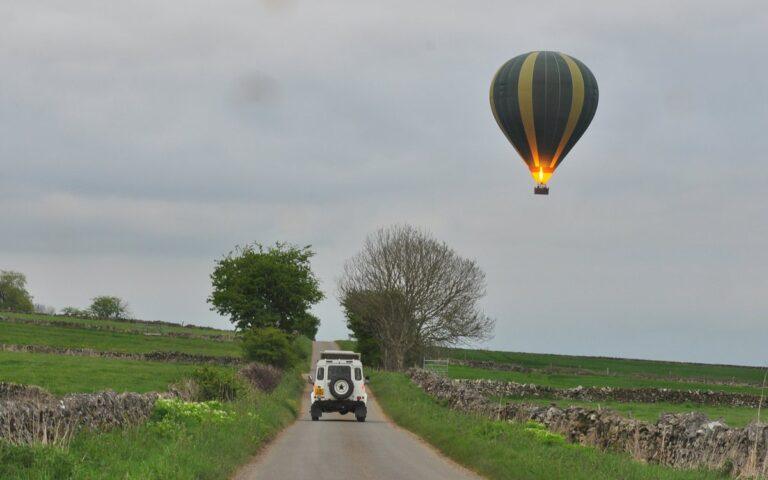
Landings look casual from the ground, but they’re the product of careful decision-making throughout the flight. Pilots track terrain, wind direction, and available open space well before touchdown, often communicating with a ground chase crew who help scout landing sites and meet the balloon at the end of the flight. That said, ballooning does involve going where the wind takes you within a general area, which is part of the charm. If you’ve ever wondered how a flight actually gets planned from launch to landing, our frequently asked questions page walks through the logistics in more detail.
Myth 4: Modern Balloons Haven’t Changed Much Since the 1780s
The basic principle behind hot air ballooning is unchanged since the Montgolfier brothers sent the first manned balloon aloft over Paris in November 1783, and Jean-Pierre Blanchard and John Jeffries made the first crossing of the English Channel by air not long after. But the equipment has come a long way. Today’s envelopes are made from ripstop nylon or polyester rather than paper and linen, burners run on efficient propane systems, and instruments give pilots real-time data on altitude, rate of climb, and fuel. The physics is ancient; the engineering is thoroughly modern.
What Actually Hasn’t Changed
- Hot air is still less dense than the cooler air around it, which is the entire basis for lift.
- Pilots still rely on visual cues, wind reading, and experience as much as instruments.
- A calm morning is still the best time to fly, just as it was two centuries ago.
Myth 5: Bigger Balloons Always Mean a Rougher Ride
Some assume that a large envelope translates into a bumpier, more turbulent experience. In reality, balloon flight tends to be remarkably smooth regardless of size, because the balloon moves with the wind rather than against it. Passengers often describe the sensation as more like floating than flying. Special-shape balloons, which can look like anything from cartoon characters to advertising logos, fly using the same basic principles as a traditional round envelope; the shape affects appearance and sometimes handling on the ground, but not the fundamental smoothness of flight.
Myth 6: You Need to Be Young and Athletic to Fly
Another one of the enduring hot air balloon myths is that rides demand some level of physical fitness. Getting into and out of the basket takes a small step over the edge, and pilots and crew are right there to help. Beyond that, passengers simply stand and enjoy the view. We’ve flown guests across a wide range of ages and abilities, and the flight itself asks nothing more of you than standing comfortably for about an hour. If you have specific mobility questions, it’s worth checking in before you book a spot on one of our balloon rides.
Myth 7: Balloon Rides Only Happen at Sunrise or Sunset
Sunrise is the traditional and most popular window for good reason: winds are calm and the light is beautiful. But the defining factor is stable air, not the clock. Depending on location and season, some evening flights are possible when conditions cooperate. What rules ballooning out is not time of day but wind, so operators watch forecasts closely and schedule around whatever window offers the calmest air, which most often lands on early morning.
Myth 8: Hot Air Balloons and Blimps Work the Same Way
It’s an easy mix-up, but the two aircraft use entirely different principles. A blimp is a lighter-than-air craft that gets its lift from a gas, typically helium, that is less dense than the surrounding atmosphere and stays that way regardless of temperature. A hot air balloon gets its lift purely from heating ordinary air until it’s lighter than the cooler air outside the envelope. That’s also why a balloon needs a burner running periodically throughout the flight, while a blimp does not.
Myth 9: One Ride Is Basically Like Any Other
Because the mechanics of flight are consistent, people sometimes assume every balloon ride offers the same experience. In practice, the landscape below, the season, the specific route the wind takes, and even the balloon itself all shape a flight in ways that make no two trips identical. A ride over rolling New England hills at harvest time looks and feels different from one in early spring, and the wind that day decides the rest.
Frequently Asked Questions
Is it normal for a flight to be rescheduled due to weather?
Yes. Wind, visibility, and precipitation all factor into the go or no-go decision, and pilots would rather reschedule than fly in conditions that compromise safety or comfort. This is standard practice across the industry, not a sign of an overly cautious operator.
How long does a typical hot air balloon ride last?
Flight time is usually about an hour in the air, though the full experience, including setup, launch, and landing logistics with the ground crew, takes longer. Exact timing depends on wind conditions on the day of your flight.
Do I need any special training or experience to ride in a balloon?
No prior experience is necessary. Your pilot and crew handle all the flying and will walk you through what to expect before you ever leave the ground.
Can I choose exactly where the balloon lands?
Not precisely, since landing sites depend on wind direction and available open ground that day. Pilots and chase crews work together to identify safe, suitable landing spots as the flight unfolds.
Hot air ballooning has survived more than two centuries of curiosity, folklore, and, yes, a fair number of myths. The reality is simpler and better than most of the legends: a quiet, carefully piloted flight that rewards patience with the weather and a genuine sense of wonder once you’re aloft.