There is a particular moment, just after sunrise, when the sky over a field seems to inhale. Then it exhales into color. A hot air balloon mass ascension is exactly what it sounds like: dozens, sometimes hundreds, of balloons inflating and lifting off within the same short window, filling the air with envelopes of every pattern and shade imaginable. If you have never stood underneath one, it is hard to describe the scale of it. If you have, you already know why pilots and passengers alike will drive across the country to see it happen again.
At Wicked Balloons, our everyday flights over Worcester and the New England countryside are intimate affairs, usually just one or two balloons drifting quietly with the wind. A mass ascension is the opposite experience: a coordinated spectacle where the sky itself becomes the show. Understanding how these events come together, and why they are so much more complicated than they look, makes watching one even more rewarding.
What a Hot Air Balloon Mass Ascension Actually Involves
A mass ascension is a choreographed launch of many balloons from a shared field within a compressed time frame, usually under an hour. It is not a race and not a formation flight in the aerobatic sense. Instead, it is a carefully sequenced release of aircraft that all depend on the same patch of ground, the same wind window, and the same narrow margin of calm morning air.
Pulling that off safely takes serious groundwork. Event organizers work with launch directors, safety officers, and often local air traffic control to manage:
- Wind speed and direction checks, sometimes updated by the minute
- A designated launch order so balloons do not crowd each other on the way up
- Ground crews for every single balloon, since inflation and launch happen almost simultaneously across the field
- A cutoff time, since rising sun often means rising wind, and the whole event may only have a 30 to 45 minute launch window
Pilots communicate constantly during a mass ascension, watching not just their own envelope but the balloons around them. Spacing on the ground and in the air is everything.
The Balloon Fiesta and the Birth of the Modern Mass Ascension
No discussion of mass ascensions is complete without the Albuquerque International Balloon Fiesta, held every October in New Mexico. First launched in 1972 with a modest thirteen balloons, it has grown into the largest ballooning event in the world, drawing hundreds of balloons and hundreds of thousands of spectators to Balloon Fiesta Park over its nine-day run. Its famous “Mass Ascension” mornings, when the entire field lifts off in two staggered waves, are the benchmark every other balloon event measures itself against.
Albuquerque’s high-desert valley also gave rise to a wind pattern so reliable it earned its own name, the Albuquerque Box, a set of layered breezes that can carry a balloon out over the valley and then back toward its launch site. It is one of the reasons the Fiesta has become the spiritual home of the mass ascension.
Other Notable Gatherings
New England has its own long tradition of balloon festivals, and mass ascensions happen at gatherings across the country and around the world each ballooning season, from regional fly-ins to larger multi-day festivals. Scale varies widely, but the underlying choreography is the same everywhere it happens.
Why Timing Is Everything
Every mass ascension is built around the same fragile ingredient: calm morning air. Hot air balloons cannot launch safely in high wind, gusty conditions, or storms, so organizers almost always schedule ascensions for the first hour or two after sunrise, before thermal activity picks up and the day’s wind begins to build.
This is the same principle that governs every flight we run out of Worcester. Sunrise flying is not a romantic choice so much as a practical one. The air is at its stillest, the light is at its best, and pilots have the widest possible margin for a safe, smooth launch. Multiply that single-balloon calculation by a hundred aircraft sharing one field, and you understand why a mass ascension lives or dies by its weather briefing.
What It Feels Like to Be Part of One
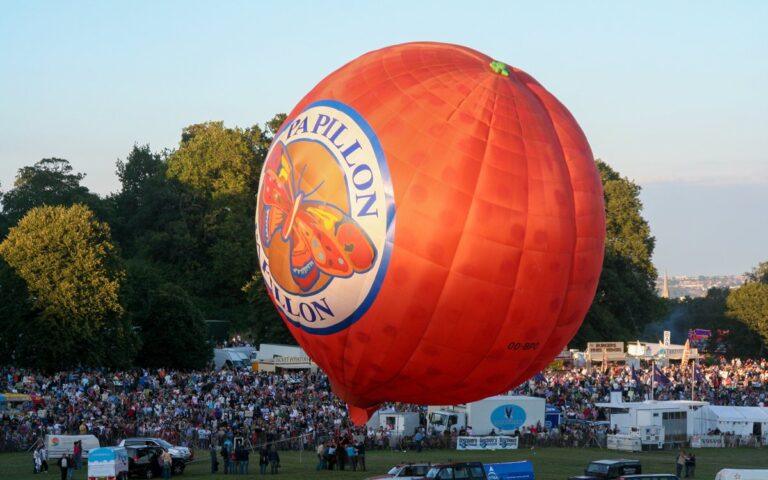
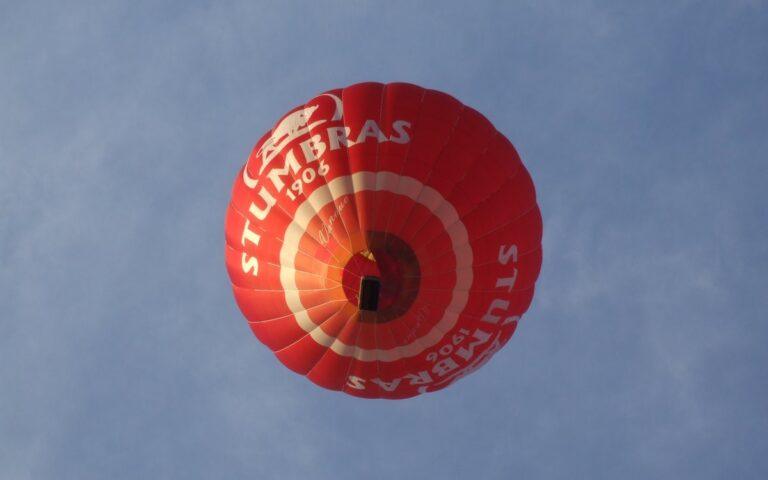
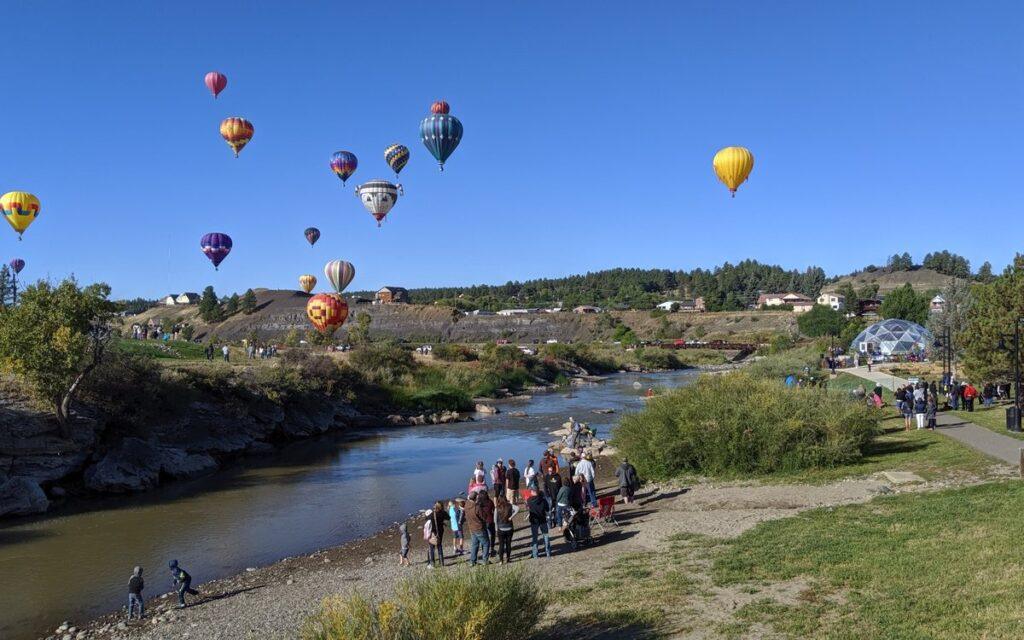
Ask any pilot who has flown in a mass ascension and they will tell you it changes how you experience the sport. Instead of watching your own envelope rise alone against an empty sky, you are surrounded by dozens of others in every direction, each one drifting at a slightly different altitude and speed. Special shape balloons, corporate advertising balloons, and traditional sport balloons all share the same airspace, creating a patchwork of color that no single photograph can quite capture.
For spectators on the ground, the experience is just as memorable. The whoosh of burners firing in sequence across the field, the gradual filling of dozens of envelopes at once, and then the near-simultaneous moment when baskets lift free of the grass all combine into something genuinely rare to witness. It is worth seeing at least once, and many people who see it once find themselves planning a trip back the following year.
Bringing the Spectacle Home
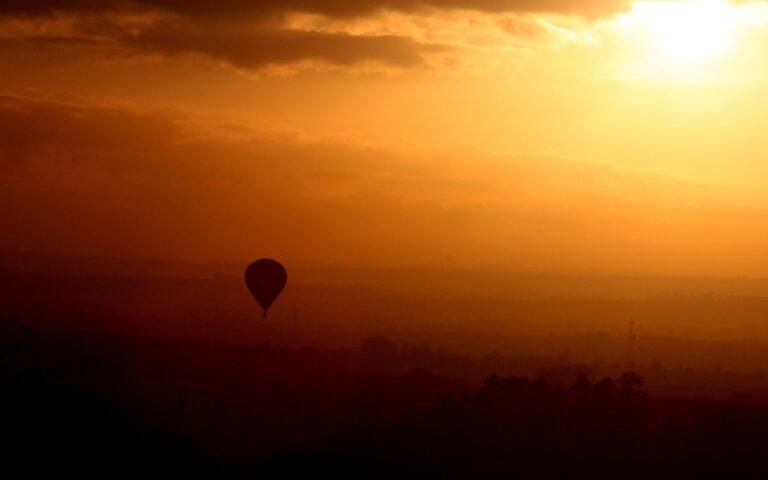
While a full-scale mass ascension takes an entire festival’s worth of logistics, the same spirit shows up in smaller ways at local events, balloon glows, and multi-balloon flights around New England. We have flown alongside other pilots at regional gatherings and always come away reminded why this sport draws people back year after year. Our photo gallery has images from some of those mornings, along with shots from our own sunrise flights over Worcester County, if you want a sense of what the sky looks like from underneath, and from above.
If watching hundreds of balloons rise at once has you dreaming of your own flight, you do not need a festival to experience that same stillness and lift. A single sunrise reservation with our crew captures much of the same magic on a smaller, more personal scale.
Frequently Asked Questions
What is the difference between a mass ascension and a balloon glow?
A mass ascension is a live launch, with balloons inflating and actually lifting off the ground together. A balloon glow is a nighttime event where tethered balloons stay on the ground and their burners light up the envelopes like giant lanterns, without any flying involved.
Is it dangerous to launch that many balloons at once?
It carries more complexity than a single-balloon launch, which is why mass ascensions rely on strict sequencing, dedicated ground crews for each balloon, and constant communication among pilots. When conditions do not cooperate, organizers delay or cancel the launch rather than compromise safety.
Can spectators get close to the balloons during a mass ascension?
At most festivals, yes. Many events invite the public to walk the launch field before liftoff, watch the inflation process up close, and even help steady a balloon’s envelope as crews ready it for flight. Check each event’s specific guidelines, since access varies by festival.
Do weather delays happen often?
Yes. Because mass ascensions depend on calm, stable air, organizers routinely push back or cancel launches when wind, moisture, or storm systems move in. It is the same judgment call every balloon pilot makes before a flight, just applied across an entire field of aircraft at once.
Whether you experience it from a festival field or from the basket of your own balloon, there is nothing quite like watching a sky fill with color at sunrise. We would love to help you find that feeling here in Worcester, one flight at a time.