On March 1, 1999, a silver and gold balloon lifted off from a snowy field in the Swiss Alps and did something no aircraft of its kind had ever done: it circled the entire planet without landing, without refueling, and without stopping. That balloon was the Breitling Orbiter 3, and by the time it touched down three weeks later in the Egyptian desert, it had rewritten the record books for ballooning forever.
For those of us who fly balloons for a living, the story of the Breitling Orbiter 3 is the kind of tale that never gets old. It is the reason so many of us fell in love with flight in the first place. Here at Wicked Balloons, we spend our mornings drifting quietly over the hills of Worcester, Massachusetts, but every pilot on our crew has, at some point, marveled at what it took to keep a balloon aloft for nearly three weeks straight, above oceans, deserts, and continents.
What Was the Breitling Orbiter 3?
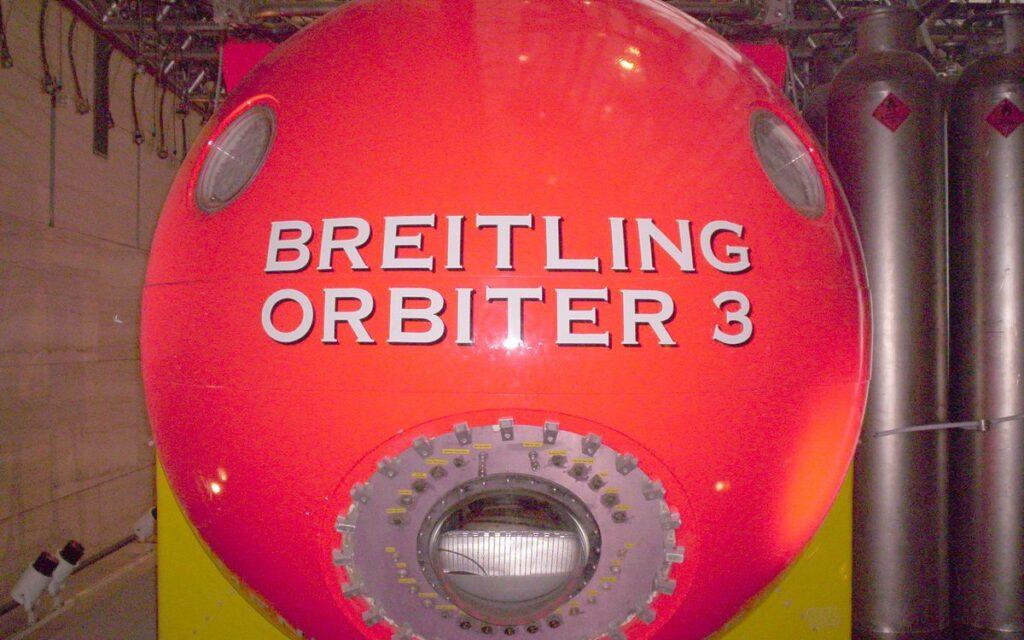
The Breitling Orbiter 3 was a Rozière balloon, a hybrid design that combines a sealed helium cell with a separate hot air chamber. This setup lets pilots manage buoyancy through day and night temperature swings without burning enormous amounts of propane. The balloon’s pressurized capsule, barely larger than a small camper, served as cockpit, kitchen, and bedroom for its two-person crew for the entire journey.
It was the third attempt in a series backed by watchmaker Breitling, following two earlier Orbiter balloons that came up short of a full circumnavigation. Persistence, and hard lessons from those first two tries, shaped nearly every system on board the third craft.
The Crew Behind the Breitling Orbiter 3
Swiss psychiatrist and adventurer Bertrand Piccard, whose family had already made aviation history in ballooning and deep-sea exploration, teamed up with British balloon pilot Brian Jones for the flight. Piccard brought the vision and the family legacy. Jones brought the technical piloting skill needed to navigate a route across jet streams, national airspaces, and shifting weather systems thousands of miles from any runway.
Their partnership mattered as much as the equipment. Living in a capsule barely big enough to stretch out in, sharing round-the-clock flying and monitoring duties, the two men had to trust each other completely, because for most of the flight, help was not coming if something went wrong.
Launch, Flight, and Landing
The balloon launched from Château-d’Oex, Switzerland, on March 1, 1999. Over the following days it climbed to altitudes above 35,000 feet, riding fast-moving jet stream winds that carried it east across the Mediterranean, over North Africa, across Asia, and out over the Pacific.
The flight was not a straight line. Diplomatic sensitivities over certain airspace, plus the ever-changing behavior of the winds, meant Piccard and Jones had to plot and re-plot their course constantly, using weather routing support from a ground team back in Europe. After crossing the Pacific, Central America, and the Atlantic, the balloon completed its circle of the globe and came down in the Egyptian desert on March 21, 1999, nearly twenty days after launch.
Consider what that means for two people and one small capsule:
- Nearly three weeks aloft without a single landing
- A route that crossed oceans, deserts, and multiple continents
- Cabin temperatures that swung dramatically between day and night
- Constant course corrections to catch favorable jet stream winds
- A landing site more than 25,000 miles from the launch point
Why the Record Still Matters
The Breitling Orbiter 3 flight earned recognition from the Fédération Aéronautique Internationale, the governing body for aviation and ballooning records, for the first nonstop circumnavigation of the Earth by balloon. It also set marks for distance and duration in unrefueled flight that still stand as landmark achievements in the sport, decades later.
What makes the record endure isn’t just the distance covered. It’s that ballooning, at its heart, is about reading the sky rather than fighting it. Piccard and Jones didn’t power their way around the planet. They found the currents that would carry them there, patiently, one jet stream at a time. That’s the same principle every one of our pilots applies on a much smaller scale each time we check the morning wind before a sunrise flight over Worcester.
The Legacy Today
The Breitling Orbiter 3 capsule now hangs in the Smithsonian’s National Air and Space Museum in Washington, D.C., alongside other milestones of flight, a fitting home for a craft that closed one of the last great open questions in aviation history. Piccard went on to co-pilot Solar Impulse, the first solar-powered airplane to circle the globe, carrying the same spirit of pushing flight into territory once thought impossible.
We think about that spirit a lot at Wicked Balloons. It’s part of why we love sharing this sport with people who have never flown before, and part of the story we tell when guests ask how we got into ballooning in the first place. Every flight, from a three-week circumnavigation to a one-hour sunrise ride, runs on the same basic trust in wind, air, and careful preparation.
Frequently Asked Questions
What is the Breitling Orbiter 3?
It is the Rozière balloon that Bertrand Piccard and Brian Jones flew in March 1999 to complete the first nonstop circumnavigation of the Earth by balloon, launching from Switzerland and landing in Egypt.
How long did the flight take?
The flight lasted just under twenty days, covering more than 25,000 miles from launch to landing.
Who piloted the Breitling Orbiter 3?
Swiss psychiatrist and explorer Bertrand Piccard and British balloon pilot Brian Jones flew the balloon together, sharing piloting duties around the clock for the entire journey.
Where can you see the Breitling Orbiter 3 today?
The capsule is on permanent display at the Smithsonian’s National Air and Space Museum in Washington, D.C.
Stories like the Breitling Orbiter 3 remind us why ballooning has captured imaginations for centuries, and why we still get a little thrill every time we fire up a burner at dawn. If you’d like to experience that same sense of wonder for yourself, closer to the ground and a lot closer to home, book a sunrise flight with us over the hills of Central Massachusetts.