Long before anyone dreamed of sunrise balloon rides over New England, the very first hot air balloon passengers were not brave aviators at all. They were a sheep, a duck, and a rooster, and their short flight over the gardens of Versailles in 1783 changed the course of human flight forever.
It is one of history’s great oddball moments: a king, a queen, a crowd of thousands, and a wicker basket carrying three farm animals into the sky. At Wicked Balloons, we spend our days thinking about hot air balloons, so we could not resist digging into the story of how it all began.
Setting the Stage in Annonay and Paris
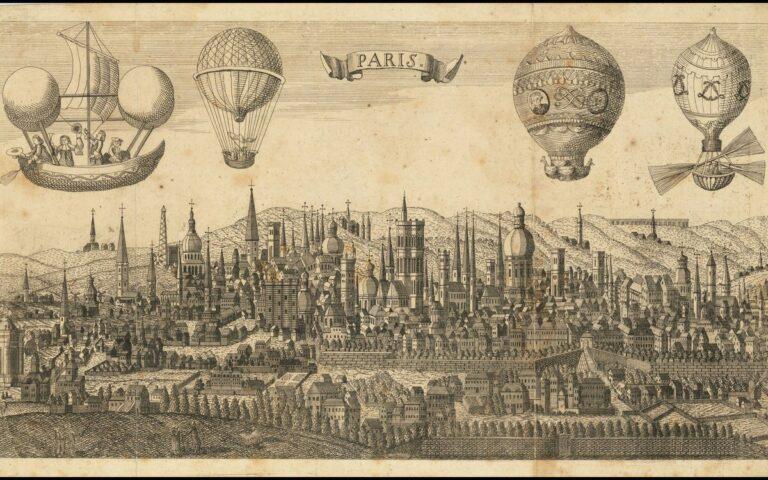
The story starts with two brothers, Joseph-Michel and Jacques-Étienne Montgolfier, papermakers from Annonay, France. Earlier in 1783, they had already sent unmanned balloons made of paper and fabric aloft, filled with hot air from a fire built beneath the balloon’s opening. Word of their experiments reached Paris, and King Louis XVI took notice.
The brothers were invited to demonstrate their invention at the royal palace of Versailles. But before risking a human life on this untested technology, the Montgolfiers and the French Academy of Sciences decided a trial run with animal passengers made more sense. Nobody yet knew whether a living creature could survive the thin, cold air that some scientists worried might exist even a short distance above the ground.
The First Hot Air Balloon Passengers Take Flight
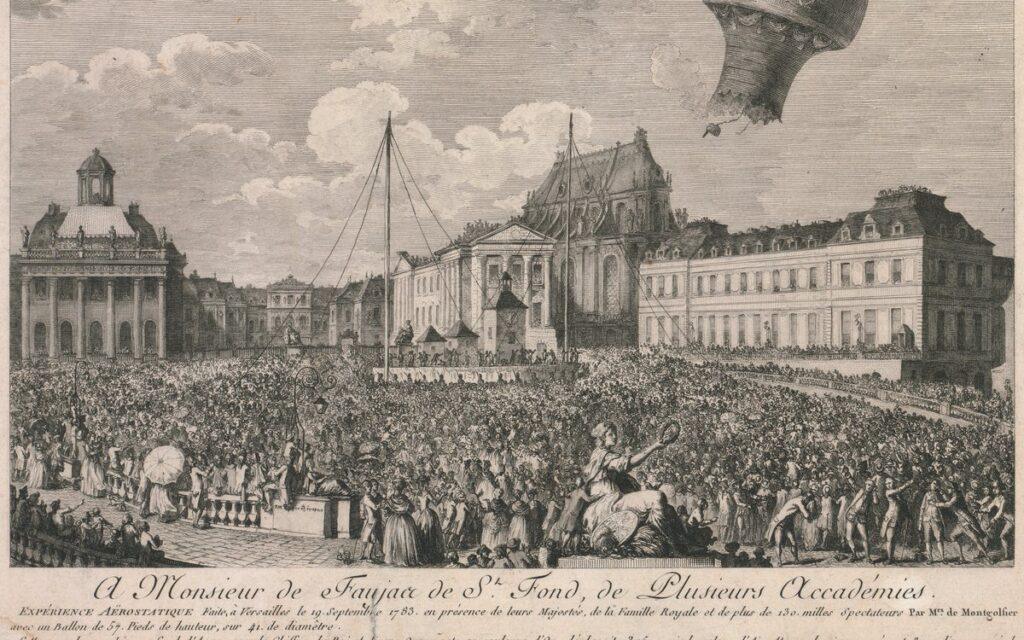
On September 19, 1783, in front of King Louis XVI, Marie Antoinette, and a large crowd gathered at Versailles, the Montgolfier brothers launched a beautifully decorated balloon carrying a sheep, a duck, and a rooster in a wicker cage attached beneath it. This flight made the trio the first hot air balloon passengers in recorded history.
The choice of animals was deliberate:
- The sheep was included because its physiology was thought to be reasonably similar to a human’s, offering a useful stand-in for how a person might fare.
- The duck served as a control of sorts, since ducks were already known to tolerate high altitudes without trouble, being accustomed to flight themselves.
- The rooster was added as a second control, but one that does not fly at high altitude under normal circumstances, so any ill effects on it would be telling.
The balloon rose above the palace grounds and drifted for roughly eight minutes before descending safely in a wooded area not far from the launch site. All three animals survived the flight. As the story is often told, the rooster suffered a minor injury to its wing, though most accounts suggest this happened from being kicked by the sheep in the cramped basket rather than from any effect of the altitude itself.
Why Animals Went First
It is easy to smile at the idea of a rooster riding in a hot air balloon, but the experiment mattered a great deal at the time. Ballooning was an entirely new frontier, and nobody had reliable data on how the human body would respond to rapid ascent or to the open air at height. Sending a sheep, a duck, and a rooster as the first hot air balloon passengers gave the Montgolfier brothers and the watching scientists real evidence that a living creature could fly and land unharmed.
That evidence cleared the way for the next, much bolder step. Just two months later, on November 21, 1783, Jean-François Pilâtre de Rozier and the Marquis d’Arlandes became the first humans to fly, lifting off from Paris in a Montgolfier balloon and soaring over the city for roughly 25 minutes. Without the earlier success of the animal flight, it is doubtful the king would have approved a manned attempt so soon.
A Legacy That Still Floats Today
More than two centuries later, the basic principle behind that first flight at Versailles has barely changed. Hot air still rises, a fabric envelope still holds it, and a basket still carries passengers below. What has changed is everything else: the materials, the burners, the safety standards, and the sheer joy that comes from a calm sunrise flight over rolling New England countryside.
We like to think that sheep, duck, and rooster would recognize the shape of a balloon overhead even today, even if the ride itself has become a good deal smoother and considerably more comfortable. If you would like to learn more about how our own crew at Wicked Balloons carries that centuries-old tradition forward here in Worcester, we would love to tell you more.
Frequently Asked Questions
Who were the first hot air balloon passengers?
The first hot air balloon passengers were a sheep, a duck, and a rooster, sent aloft by the Montgolfier brothers at Versailles on September 19, 1783. Their successful flight paved the way for human flight less than two months later.
Did the animals survive the flight?
Yes. All three animals landed safely after a flight of about eight minutes. The rooster reportedly suffered a minor wing injury, generally attributed to being jostled by the sheep in the basket rather than to the flight itself.
Why were a sheep, a duck, and a rooster chosen specifically?
Each animal served a purpose. The sheep’s biology was considered reasonably comparable to a human’s. The duck was a natural flyer already accustomed to altitude, serving as one control. The rooster does not typically fly high, making it a useful comparison if the altitude itself caused harm.
When did the first human hot air balloon flight happen?
About two months after the animal flight, on November 21, 1783, Jean-François Pilâtre de Rozier and the Marquis d’Arlandes flew over Paris in a Montgolfier balloon, becoming the first humans to fly.
From a sheep, a duck, and a rooster over the gardens of Versailles to sunrise flights over Massachusetts, the story of ballooning has always been about curiosity and a willingness to trust the sky. We are grateful to be part of its continuing chapter.