Long before anyone argued about hot air balloon vs gas balloon designs at a launch field, two French inventors were racing each other to be first off the ground. The rivalry started in 1783, and in some quiet corners of the ballooning world, it never really ended.
Two Balloons, Ten Days Apart
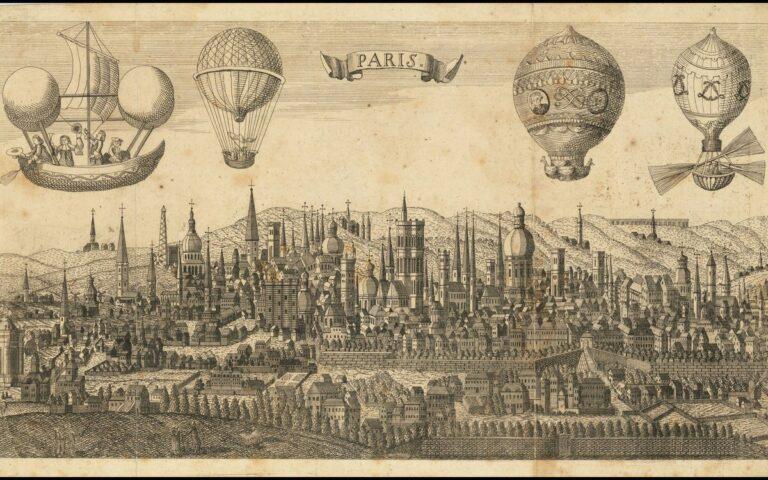
The hot air balloon vs gas balloon story begins in Annonay, France, where paper-mill owners Joseph-Michel and Jacques-Étienne Montgolfier gave the first public demonstration of an unmanned hot air balloon on June 4, 1783. Smoke and heated air filled a paper-and-fabric envelope, and it climbed skyward in front of a stunned crowd. Word reached Paris fast.
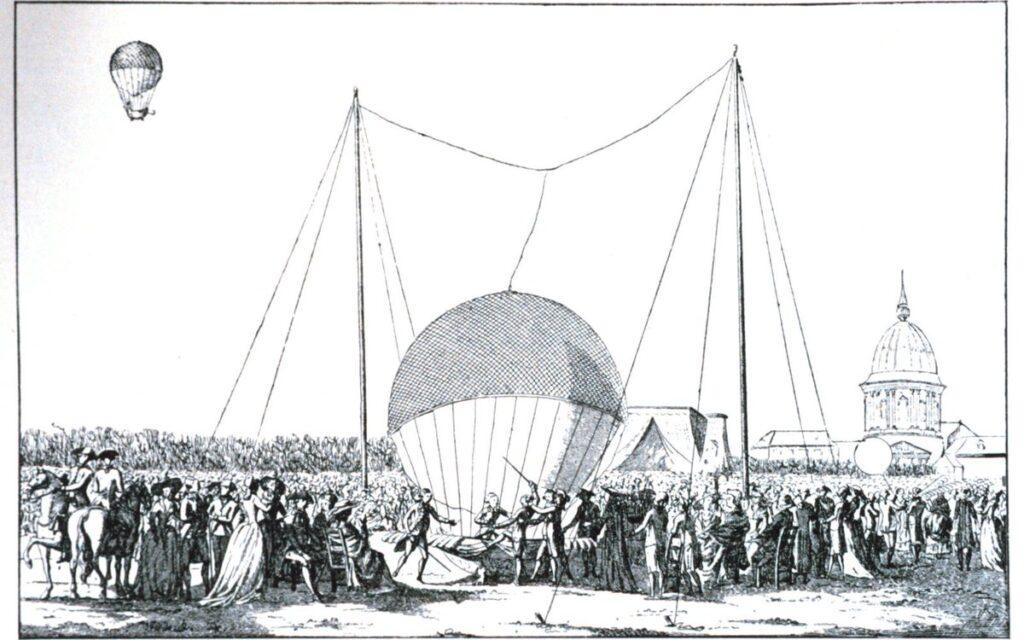
Not to be outdone, the physicist Jacques Charles had a different idea. He had been experimenting with the newly discovered gas hydrogen, which was lighter than air and needed no fire to keep a balloon aloft. On August 27, 1783, just weeks after the Montgolfiers’ debut, Charles launched his own unmanned balloon from the Champ de Mars in Paris. It reportedly frightened villagers in Gonesse who had never seen anything like it fall from the sky.
Two approaches, two teams, one Parisian public suddenly obsessed with flight. The rivalry was on.
The Race to Carry a Person
Demonstrations were exciting, but everyone wanted to know whether a balloon could carry a human being. The Montgolfiers got there first. On November 21, 1783, Jean-François Pilâtre de Rozier and the Marquis d’Arlandes lifted off from the Bois de Boulogne in a Montgolfier hot air balloon and flew over Paris for roughly 25 minutes, landing safely a few miles away. It was the first manned free flight in history.
Jacques Charles answered just ten days later. On December 1, 1783, he and Nicolas-Louis Robert flew a hydrogen gas balloon from the Tuileries Garden, covering a greater distance and reaching a higher altitude than the Montgolfier flight. Charles reportedly made a short solo second ascent that same day, becoming the first person to fly alone.
Both flights were legitimate triumphs. Both pilots became instant celebrities. And both technologies had just proven themselves within the same two weeks.
What Made Each Design Different
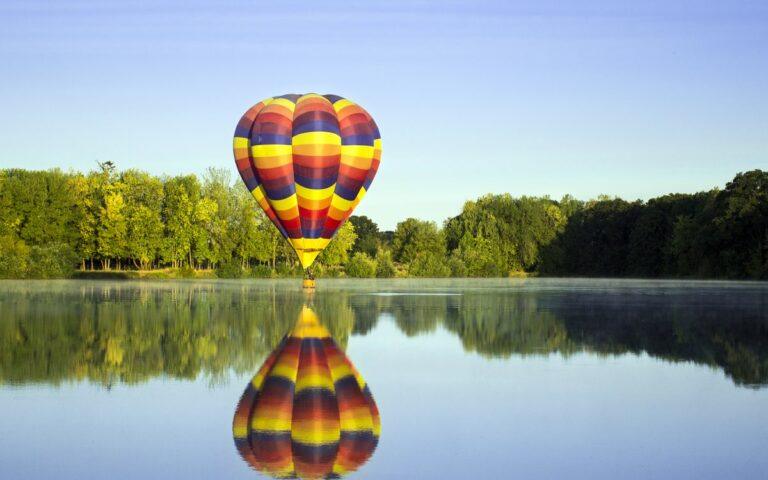
- Hot air balloons use heated air, which is naturally less dense than the cooler air around it. A burner (originally a fire basket, later a propane flame) keeps the air hot enough to sustain lift.
- Gas balloons use a lighter-than-air gas, historically hydrogen and later helium, sealed inside the envelope. No ongoing heat source is needed, so flights can last far longer.
- Hot air balloons are easier and cheaper to launch, land, and pack away, which is why they still dominate recreational and sport ballooning today.
- Gas balloons hold their lift for many hours or even days, making them the natural choice for early long-distance and altitude records.
Gas Balloons Take the Distance Crown
For most of the 19th century, gas balloons were the serious tool for real exploration. They stayed aloft longer, flew higher, and could cross bigger stretches of water and land than a hot air balloon of the era ever could. Jean-Pierre Blanchard and John Jeffries used a hydrogen gas balloon to make the first aerial crossing of the English Channel on January 7, 1785, a feat that would have been essentially impossible for a wood-fired hot air craft of that period.
That same rivalry had a tragic footnote. Pilâtre de Rozier, the hero of that first manned flight in 1783, died in 1785 attempting his own Channel crossing in a hybrid balloon that combined a hydrogen gas cell with a hot air chamber underneath, an ambitious design meant to capture the best of both worlds. The combination balloon that still bears his name, the Rozière, is used today for the longest-duration flights in the sport.
Gas balloons went on to dominate distance and altitude ballooning for well over a century, including the Gordon Bennett Cup, a long-distance gas balloon race that began in 1906 and, remarkably, is still contested today.
Hot Air Makes Its Comeback
By the mid-20th century, gas ballooning required scarce and increasingly expensive helium, along with pressurized envelopes and specialized handling. Hot air ballooning, meanwhile, had faded into a historical curiosity. That changed in the late 1950s and 1960s, when American engineer Ed Yost developed a modern hot air balloon using a lightweight nylon envelope and a propane burner, a design that is the direct ancestor of the balloons flying today.
Yost’s innovation made hot air ballooning affordable, portable, and far safer than it had ever been. It sparked the sport ballooning boom that gave us balloon festivals, advertising balloons, and the sunrise recreational flights that companies like ours now offer across New England. In the debate over hot air balloon vs gas balloon travel, this was the moment hot air pulled decisively ahead for everyday flying.
Gas Balloons Still Have Their Moments
Gas and Rozière balloons never disappeared. In 1978, the Double Eagle II became the first balloon to cross the Atlantic Ocean successfully, a gas balloon achievement that captured the world’s attention. And in 1999, Bertrand Piccard and Brian Jones completed the first nonstop around-the-world balloon flight aboard the Breitling Orbiter 3, a Rozière design that leaned on gas balloon endurance to stay aloft for weeks.
Hot Air Balloon vs Gas Balloon: Why the Debate Still Matters
So which one actually “won”? In practical terms, hot air balloons won the everyday sky. They are quicker to inflate, simpler to transport, and can land almost anywhere with enough open ground, which is exactly why they power the recreational rides, festival gatherings, and advertising balloons you see today. Gas balloons, meanwhile, kept the record books, still holding many of the marks for distance, duration, and altitude.
The rivalry was never really about one technology being wrong. Each solved a different problem. Hot air offered accessibility. Gas offered endurance. Together, they built the entire sport of ballooning from the ground up, ten days apart, in the same French autumn.
We think about that history every time we’re out at dawn, setting up a balloon for a sunrise flight. If you’d like to learn more about how our team came to fly hot air balloons across Massachusetts and New England, there’s a story behind that too.
Frequently Asked Questions
Which came first, the hot air balloon or the gas balloon?
The hot air balloon came first by a matter of weeks. The Montgolfier brothers demonstrated their unmanned hot air balloon on June 4, 1783, while Jacques Charles launched his first hydrogen gas balloon on August 27, 1783.
Why do modern recreational balloons use hot air instead of gas?
Hot air balloons are simpler and less expensive to operate. They don’t require scarce gases like helium, they inflate and deflate quickly, and they can land in a wide range of open spaces, all of which make them far better suited to recreational and commercial flying.
Do gas balloons still exist today?
Yes. Gas balloons and hybrid Rozière balloons are still used for long-distance and record-setting flights, including continued editions of the Gordon Bennett Cup, a gas balloon distance race that dates back to 1906.
What is a Rozière balloon?
A Rozière balloon combines a sealed gas cell with a separate hot air chamber, letting pilots adjust altitude using heat while relying on the gas cell for sustained lift over long flights. It’s named after Jean-François Pilâtre de Rozier, the pilot of the first manned hot air balloon flight in 1783.
More than two centuries later, that friendly rivalry from 1783 is still visible every time a balloon takes to the sky, whether it’s a hot air envelope glowing at sunrise or a gas balloon setting its sights on the horizon.