On a cold morning in 1783, a sheep, a duck, and a rooster became the world’s first hot air balloon passengers, lifting off from the French royal courtyard at Versailles under a paper-and-fabric envelope built by the Montgolfier brothers. It is one of the strangest facts in the history of hot air balloons: the technology that would one day carry sunrise sightseers over New England vineyards and stone walls got its start with barnyard animals and a king’s curious court. Just a few months later, humans went up too. And then, a mere 120 years after that, the Wright brothers changed the sky forever. You might expect ballooning to have quietly faded once airplanes arrived. It didn’t. It found new reasons to exist, and it is still finding them today.
The Golden Age Before the Airplane
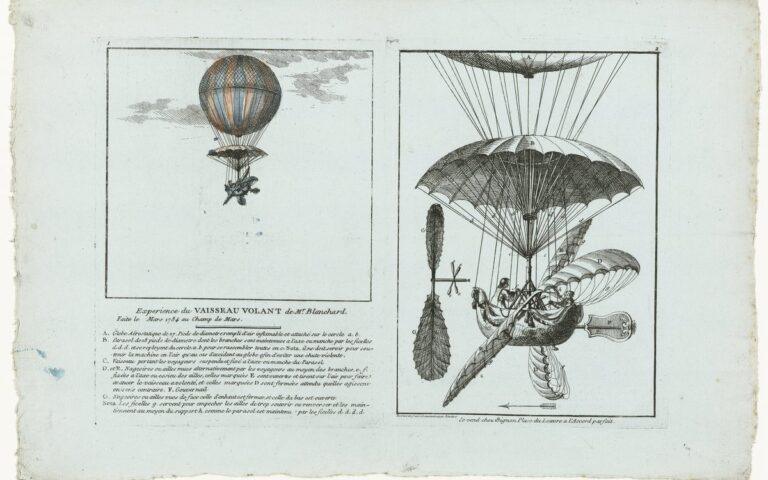
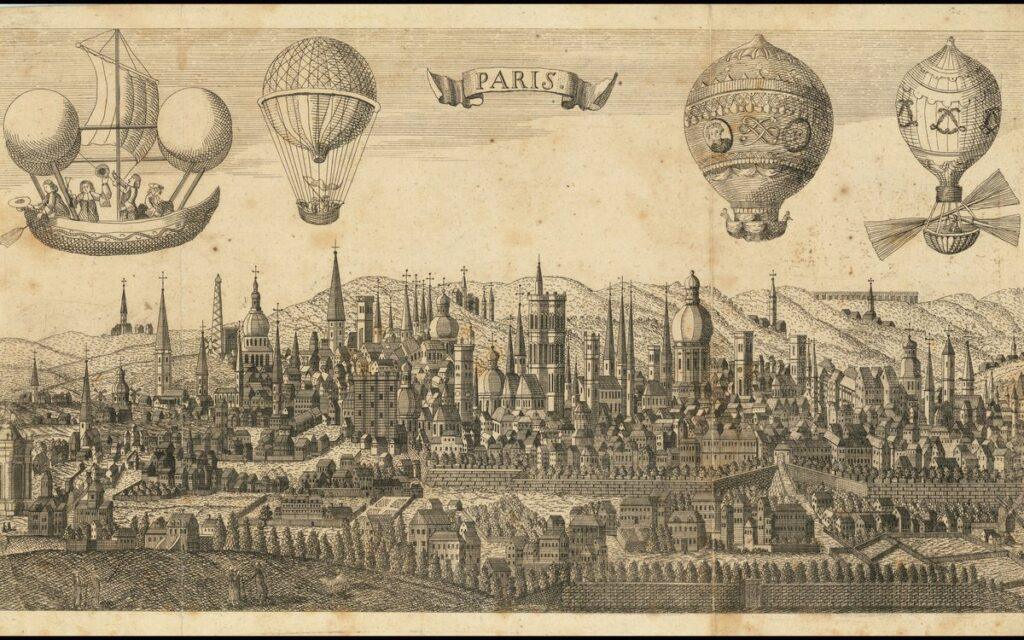
For well over a century, balloons had the sky entirely to themselves. After the Montgolfiers’ hot air demonstration in June 1783, Jacques Charles quickly followed with a hydrogen-filled balloon, and by the end of that same year both Pilatre de Rozier and the Marquis d’Arlandes had made the first free flight carrying people. Ballooning became a sensation across Europe, then America, drawing enormous crowds to fairgrounds and city squares.
Balloons were more than a novelty act. They carried the first aerial photographs, gave scientists their first direct measurements of the upper atmosphere, and served as reconnaissance platforms in the American Civil War and the Franco-Prussian War. By the late 1800s, gas balloons and early dirigibles represented the cutting edge of human flight. There was nothing else to compare them to.
Then the Airplane Arrived
The Wright brothers’ powered flight at Kitty Hawk in December 1903 changed the calculation overnight. An airplane could go where its pilot pointed it, land where it chose, and travel far faster than the wind. Within a generation, airplanes had eclipsed balloons for nearly every practical purpose: mail, passengers, military reconnaissance, and speed records all moved to fixed-wing aircraft. Rigid airships like the Hindenburg carried on for passenger travel into the 1930s, but after a string of high-profile disasters, that chapter closed too.
It would have been reasonable to assume ballooning was finished. Airplanes could do everything balloons could do, only faster and with steering. But the history of hot air balloons took a different turn, because balloonists stopped competing with airplanes on speed and started offering something airplanes never could.
What Balloons Kept That Airplanes Never Had
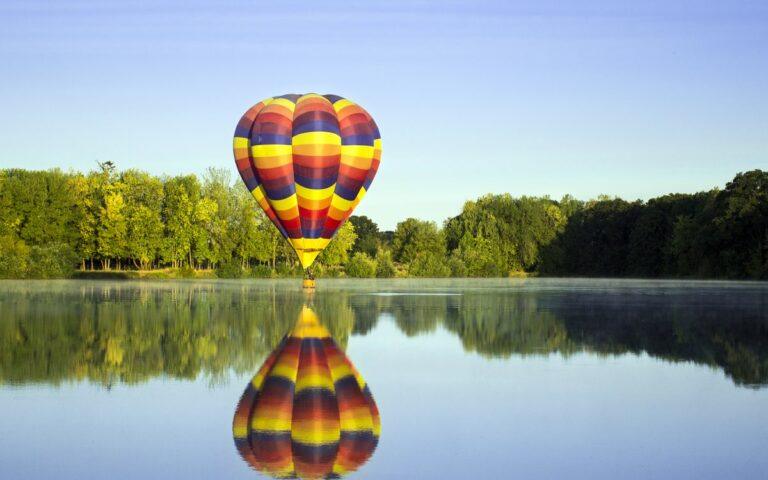
A balloon does not fight the wind; it becomes part of it. There is no engine roar, no vibration, no fixed flight path. Passengers drift in near silence, close enough to hear a rooster crow or a dog bark from a farmhouse below. That experience, quiet, slow, and immersive, turned out to be irreplaceable, and it is exactly what kept people showing up at Wicked Balloons launch fields at sunrise generations later.
Balloons also proved genuinely useful in ways airplanes could not match:
- High-altitude science: Swiss physicist Auguste Piccard used a pressurized gondola beneath a gas balloon to reach the stratosphere in 1931 and 1932, gathering data no airplane of the era could touch.
- Extreme testing: In 1960, U.S. Air Force officer Joseph Kittinger rode a balloon nearly twenty miles up before parachuting back to earth, a record-setting jump that stood for decades and depended entirely on balloon technology.
- Pure spectacle and sport: Balloon meets and long-distance crossings kept public fascination alive even as commercial aviation moved on to jets.
The Modern Hot Air Balloon Is Reborn
The real turning point for recreational ballooning came in 1960, when American engineer Ed Yost flew the first modern hot air balloon using a lightweight nylon envelope and a propane burner, a design that is still the direct ancestor of every balloon flying today, including the ones at Wicked Balloons. This innovation is arguably the single most important moment in the history of hot air balloons since the Montgolfiers themselves. It made ballooning affordable, portable, and safe enough to become a hobby and a business rather than a scientific curiosity.
The sport grew quickly from there. The Balloon Federation of America was founded in 1961 to organize pilots and set safety standards. Balloon festivals sprang up across the country, most famously the Albuquerque International Balloon Fiesta, which began in 1972 and now draws hundreds of colorful envelopes into the New Mexico sky each October. New England developed its own strong balloon culture too, with pilots taking advantage of the region’s calm dawn air and dramatic seasonal color.
Records That Kept Ballooning in the Headlines
Even as jets crossed oceans in hours, balloonists kept pushing their own boundaries. In 1978, the Double Eagle II became the first balloon to cross the Atlantic. In 1999, the Breitling Orbiter 3 completed the first nonstop circumnavigation of the globe by balloon, with Bertrand Piccard, grandson of the stratosphere pioneer, at the controls alongside Brian Jones. A few years later, American businessman Steve Fossett completed the first solo balloon flight around the world. These feats reminded the public that ballooning was not a relic; it was still writing new chapters.
Why the History of Hot Air Balloons Still Matters Today
Every sunrise flight we launch carries a small piece of that nearly two-and-a-half-century story. The basic idea, heat air, let it rise, ride the wind, has not changed since 1783. What has changed is the craftsmanship: modern envelopes, precise burners, and decades of accumulated pilot knowledge about reading wind layers and weather windows. You can learn more about how our team approaches that craft on our about page, where we share our own place in this long tradition.
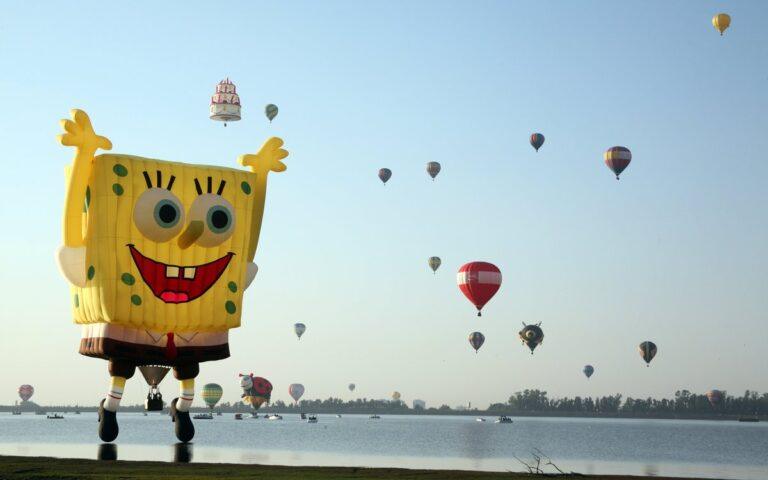
Balloons also found commercial niches airplanes never touched. Special-shape balloons became beloved marketing tools and film props, precisely because their scale and whimsy cannot be replicated by any other aircraft. That same appeal is why balloons remain fixtures at festivals, why they turn up in movies and television productions, and why so many people still put a sunrise flight on their bucket list.
Frequently Asked Questions
Who invented the hot air balloon?
The Montgolfier brothers, Joseph-Michel and Jacques-Etienne, built and flew the first hot air balloons in France in 1783, launching the modern history of hot air balloons.
Why didn’t airplanes replace balloons entirely?
Airplanes replaced balloons for speed and practical transportation, but balloons offer a quiet, slow, immersive experience and unique capabilities, such as high-altitude scientific research and distinctive visual spectacle, that fixed-wing aircraft cannot reproduce.
What was the biggest advancement in modern ballooning?
Ed Yost’s 1960 development of the lightweight nylon envelope and propane burner system created the modern hot air balloon and made recreational ballooning practical and accessible.
Is hot air ballooning still a growing activity?
Yes. Balloon festivals, sightseeing flights, and special-shape balloons remain popular across the country, and companies like ours continue to offer sunrise balloon rides across New England.
From a barnyard demonstration at Versailles to sunrise flights over Massachusetts stone walls, ballooning has never needed to outrun the airplane. It only needed to keep offering something no other aircraft can: the wind itself, experienced firsthand.