Watch a hot air balloon climb into a pink New England sunrise and it’s easy to think of it as one graceful object. In truth, it’s three very different machines working together, and understanding the parts of a hot air balloon is the fastest way to appreciate just how much engineering hides behind that quiet, floating calm. At Wicked Balloons, we spend our mornings surrounded by these machines, so we thought we’d walk you through what’s actually up there with you.
Every balloon, whether it’s a classic teardrop shape or one of the custom special-shape balloons we build, comes down to the same three core parts: the envelope, the basket, and the burner. Learn those three and you’ll understand nearly everything about how a balloon flies.
The Envelope: More Than Just Fabric
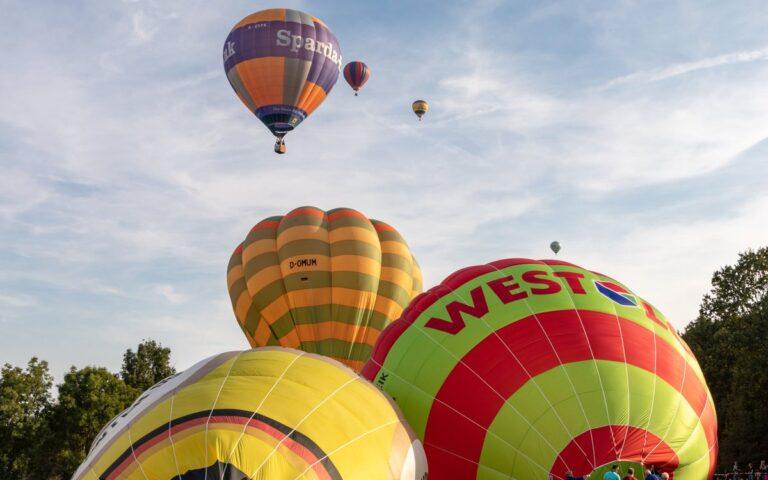
The envelope is the big fabric balloon itself, and it’s the part most people picture when they hear “hot air balloon.” Modern envelopes are made from ripstop nylon or polyester, the same family of fabric used in parachutes and high-performance sails, coated to hold heat and resist the sun’s ultraviolet rays over hundreds of flight hours.
The fabric alone couldn’t hold its shape, though. A network of vertical load tapes, sewn in from the top of the envelope down to the base, carries the entire weight of the basket and its passengers. Those tapes gather at the very top into a piece called the parachute vent, or top vent, a circular panel the pilot can pull open with a line to release hot air quickly during descent and landing.
- Gores: the individual fabric panels sewn together, running top to bottom, that give the envelope its shape.
- Load tapes: reinforced strips that carry weight from the basket up through the fabric.
- Skirt: the heat-resistant fabric mouth at the very bottom, closest to the flame.
- Vent: the top panel the pilot opens to let hot air escape for a controlled descent.
A typical envelope holds tens of thousands of cubic feet of heated air, though the exact volume depends heavily on the balloon’s size and intended passenger capacity. Bigger envelopes lift more weight, which is why our sunrise hot air balloon rides use envelopes sized specifically for the number of guests aboard that morning.
The Basket: Where You’ll Stand
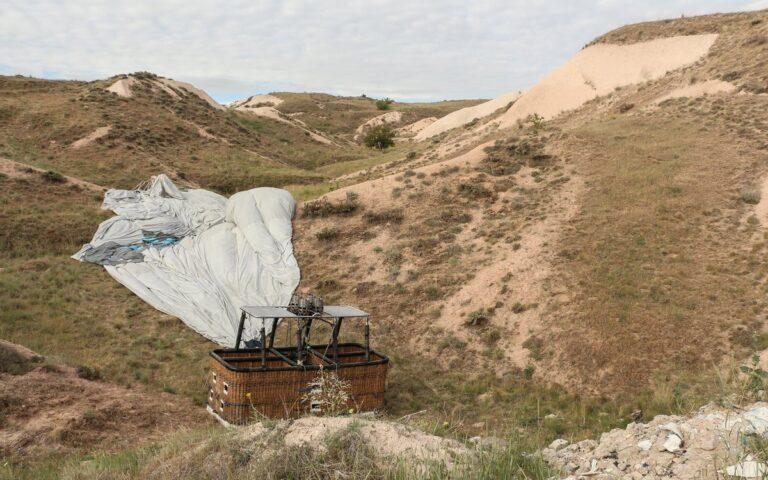
The basket, sometimes called the gondola, is traditionally woven from wicker, and that’s not just tradition for tradition’s sake. Wicker is lightweight, flexible, and remarkably good at absorbing the shock of a firm landing, flexing slightly instead of cracking the way a rigid material might. Many baskets today reinforce that wicker weave with an internal frame, and the whole thing hangs from the envelope’s load tapes by sturdy cables or straps rather than sitting rigidly attached.
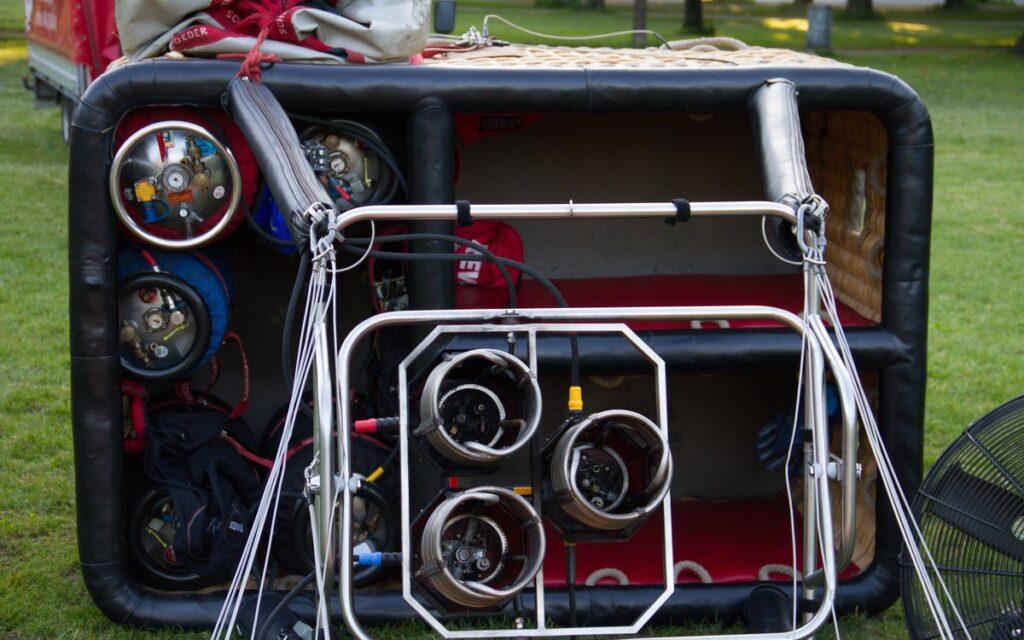
Inside the basket you’ll find the fuel tanks, usually stainless steel or aluminum cylinders holding propane, secured upright along the basket walls. You’ll also find the burner frame overhead, instruments like an altimeter and variometer to track altitude and rate of climb, and simple padded compartments dividing the basket for passengers. Pilots stand at the controls, typically toward the center, with a clear view in all directions.
Why Wicker Still Wins
Balloon builders have experimented with aluminum and composite baskets over the decades, and specialized versions exist for certain uses. But for standard passenger flight, wicker remains the industry favorite because it flexes on landing, is easy to repair, and has simply proven itself over nearly two centuries of ballooning.
The Burner: The Heart of the System
The burner is the part that does the actual work of keeping you aloft. Mounted on a frame above the basket, just below the mouth of the envelope, the burner forces liquid propane through a coil, vaporizes it, and ignites it into a controlled column of flame that shoots up into the skirt of the envelope.
Pilots control the burner with a blast valve, a simple lever that releases fuel and flame in short bursts. There’s real skill in this: too little heat and the balloon sinks, too much and it climbs faster than intended. Most burners include a pilot light that stays lit throughout the flight, so a fresh blast ignites instantly rather than requiring a spark each time. Many balloons carry two burner units for redundancy, since a reliable flame is not something you want to gamble on a few thousand feet up.
The physics is refreshingly simple: hot air is less dense than the cooler air surrounding the envelope, so the balloon rises. Let the air inside cool, whether by easing off the burner or opening the top vent, and the balloon settles back down. There’s no engine, no propeller, and no steering wheel. Direction comes entirely from finding different wind currents at different altitudes, which is part of what makes chasing the right conditions such an essential part of the job for any pilot.
How These Parts Work Together
None of these three parts of a hot air balloon does much on its own. The envelope needs the burner’s heat to fill and rise. The basket needs the envelope’s lift to leave the ground. The burner needs the basket to hold its fuel supply and give the pilot a stable platform to work from. Together, they form one of the oldest and, in some ways, most elegantly simple flying machines humans have ever built.
That simplicity is part of the appeal. Manned hot air ballooning traces back to the Montgolfier brothers’ first public demonstration in France in 1783, and while materials have improved dramatically since then, nylon instead of paper and silk, propane instead of straw fires, the basic three-part formula of envelope, basket, and burner hasn’t changed.
Frequently Asked Questions
What is the envelope of a hot air balloon made of?
Modern envelopes are made from ripstop nylon or polyester fabric, coated for heat resistance and UV protection. The panels, called gores, are sewn together with reinforced load tapes running from top to bottom to carry the weight of the basket.
Why are hot air balloon baskets made of wicker?
Wicker is light, flexible, and absorbs shock well on landing, flexing rather than cracking under a firm touchdown. It’s also easy to repair, which is why it has remained the standard material for passenger baskets for generations.
How does the burner make the balloon rise?
The burner vaporizes propane and ignites it into a flame aimed up into the envelope, heating the air inside. Since hot air is less dense than the surrounding cooler air, the envelope becomes buoyant and the whole balloon rises, similar to how a bubble rises through water.
Can a hot air balloon be steered?
Not directly from side to side. Pilots control altitude with the burner and vent, and steer by finding wind currents moving in different directions at different heights. Reading those currents is one of the most important skills a balloon pilot develops.
The next time you see a balloon drifting over the Massachusetts countryside at dawn, you’ll know there’s a lot more going on above the basket than fabric and hot air. If you’d like to see the envelope, basket, and burner working together in person, our reservations page has the details on booking a sunrise flight with us.