Ask a first-time passenger how do hot air balloons navigate, and most guess there’s a rudder or a joystick hidden somewhere in the basket. There isn’t. A balloon has no steering wheel at all. Instead, a pilot reads the sky itself, climbing and descending to find the layer of wind moving in the direction they want to go. It sounds almost too simple to work, and yet it’s how balloonists have found their way across the countryside since the very first flights over two centuries ago.
If that idea catches your imagination, it’s worth understanding a little more about how it actually works before you climb into a basket over the Massachusetts countryside yourself.
The Basic Truth: There Is No Steering Wheel
A hot air balloon moves exactly as fast, and exactly in whatever direction, the surrounding air is moving. The envelope has no rudder, no propeller, and no way to push against the air horizontally. This is the single fact that makes ballooning different from every other form of flight, and it’s the starting point for understanding how do hot air balloons navigate at all.
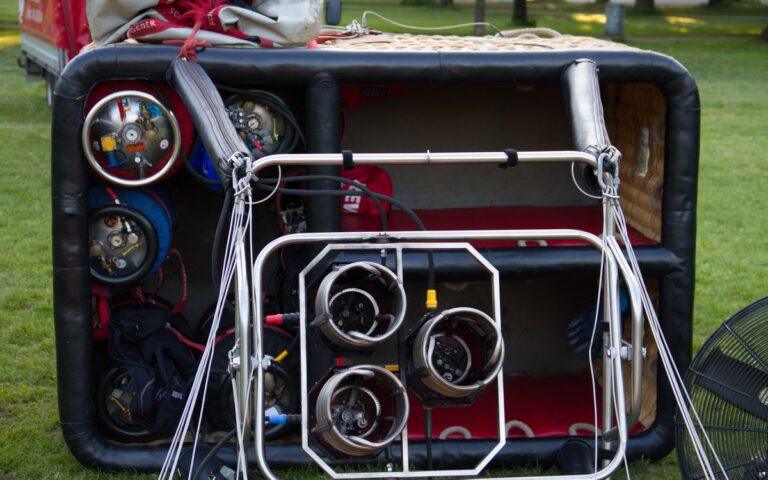
What the pilot does control is altitude, using the burner to heat the air inside the envelope and gain height, or venting a bit of hot air to descend. That’s the entire toolkit: up and down. Everything else is wind.
Reading Layers: How Do Hot Air Balloons Navigate Without a Rudder
Here’s the trick that makes it all work. Wind rarely blows the same direction at every altitude. Close to the ground, wind might drift gently from the southwest. A few hundred feet up, it may have shifted to blow more from the west. Higher still, it could be moving almost due north. These differences in speed and direction between layers are called wind shear, and pilots treat it as a resource rather than a nuisance.
By climbing or descending to find a layer heading the direction they want, a balloon pilot effectively “steers” using altitude alone. Fly low to catch one heading, climb a few hundred feet to catch another, and the balloon’s path across the ground can curve, zigzag, or even circle back near the launch site, all without ever pointing the balloon anywhere. Passengers are often amazed to look down and see the ground track bend in ways that feel deliberate, because it is.
Why This Makes Every Flight Different
Because no two mornings have quite the same wind profile, no two flight paths are ever identical, even from the same launch field. That unpredictability is part of the appeal for pilots who love the puzzle of it, and it’s part of why sunrise is the preferred time to fly. Winds tend to be calmest and most layered and predictable in the hours right after dawn, before the sun heats the ground unevenly and stirs up thermals and gusty, turbulent air.
What Pilots Study Before They Ever Leave the Ground
Reading wind in flight is only half the story. Long before a passenger arrives for a scheduled ride, the pilot has already been studying the atmosphere for hours. That preparation typically includes:
- Surface wind observations and forecasts for the exact launch window
- Upper-air wind data showing direction and speed at different altitudes
- Cloud cover and visibility, since balloons need clear conditions to fly safely and legally
- Terrain and obstacles downwind, including power lines, highways, and bodies of water
- Suitable landing areas along the probable flight path, with more than one option in mind
A pilot who sees a forecast that doesn’t line up cleanly with safe launch and landing conditions will simply scrub the flight. This is exactly why balloon rides get rescheduled for weather more often than most first-time flyers expect. It isn’t caution for its own sake; it’s the pilot’s judgment about whether the sky offers a route worth taking.
The Chase Crew’s Part in the Route
Because the endpoint of a balloon flight can’t be pinned down in advance the way a plane’s destination airport can, every flight depends on a ground crew tracking the balloon’s progress and driving to meet it wherever it eventually lands. The pilot stays in radio contact, describing the balloon’s drift and likely touchdown area as conditions develop. It’s a genuine team effort between sky and ground, refined over generations of ballooning into a smooth, practiced routine.
A Tradition Going Back to the Beginning
This method of navigating by altitude rather than steering isn’t a modern workaround, it’s literally how ballooning has worked from the start. When the Montgolfier brothers launched their first public hot air balloon flights in France in 1783, pilots had no more directional control than balloonists do today. Every advance since then, from better burners to more responsive envelope materials to satellite weather data, has improved a pilot’s ability to read the wind, not given them a way to bypass it. In some sense, flying with the wind rather than against it is the entire point.
Frequently Asked Questions
Can a hot air balloon pilot choose exactly where to land?
Not with precision, but experienced pilots can often identify a general landing area, sometimes even a specific field, well ahead of time by reading how the wind layers are behaving that morning. The final touchdown spot still depends on the wind cooperating, which is part of why crews scout more than one likely option.
Does a hot air balloon ever fly backward or in circles?
Yes. Since different altitudes can carry different wind directions, a pilot can climb into a layer moving one way and descend into a layer moving another, which can make the balloon’s ground track curve, double back, or loop in ways that feel almost impossible from below.
Why do balloon rides happen so early in the morning?
Sunrise and the hour or two afterward typically offer the calmest, most predictable wind layers of the day. Once the sun warms the ground, thermals and shifting surface winds make conditions rougher and far harder to read, so most flights are scheduled for early morning rather than midday.
What happens if the wind isn’t right on the day of my flight?
The pilot will delay or reschedule. Flying only happens when conditions offer a safe, readable route from launch to landing, so a forecast that doesn’t cooperate simply means waiting for a better morning rather than taking a chance in the air.
The absence of a steering wheel is exactly what makes ballooning feel like flight in its purest form, drifting with the currents rather than fighting them. If you’d like to experience that firsthand over the New England countryside, take a look at our sunrise balloon rides and see the sky the way a pilot does.