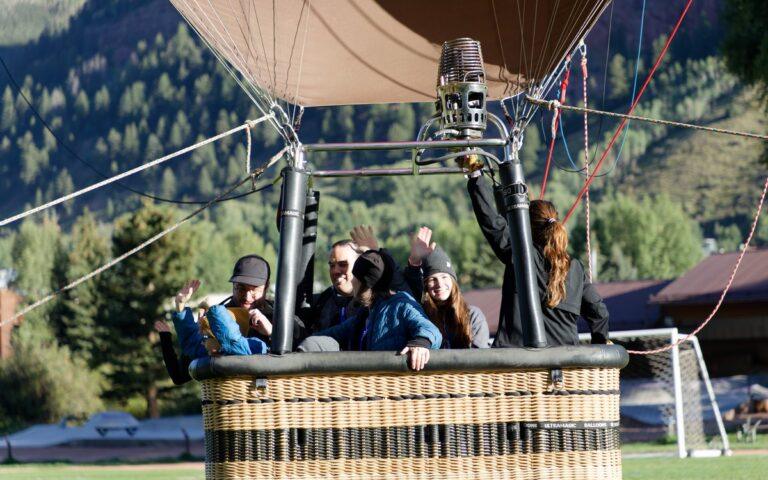
If queasy stomachs have kept you on the ground, here’s some reassuring news: do you get motion sick on a hot air balloon? For the overwhelming majority of passengers, the answer is no. Hot air ballooning is one of the gentlest ways to fly, and the very thing that makes it magical — drifting silently with the wind instead of fighting against it — is also what makes it so easy on the stomach.
Still, if you’ve ever felt queasy on a boat, a twisty mountain road, or a turbulent airplane, it’s natural to wonder whether a sunrise balloon flight will treat your inner ear any better. Let’s look at what actually happens up there, why it feels so different from other kinds of motion, and how to set yourself up for a comfortable ride.
Do You Get Motion Sick on a Hot Air Balloon? The Short Answer
Motion sickness happens when your inner ear, eyes, and body send your brain conflicting signals about movement. Cars, boats, and airplanes are full of this kind of conflict: sudden turns, bumps, drops, and vibration that your eyes don’t always track in sync with what your ear feels. A hot air balloon avoids nearly all of that.
Once a balloon lifts off, it moves at the same speed as the wind around it. There’s no headwind, no jostling, and no sense of forward motion at all — you’re simply floating inside the air mass rather than pushing through it. Pilots also fly balloons on calm mornings by design, so the ride itself tends to be smooth, slow, and largely vertical rather than fast and side-to-side. That combination is exactly why so few passengers report any queasiness, even those who consider themselves prone to motion sickness elsewhere.
What a Balloon Ride Actually Feels Like
Passengers are often surprised by how still everything feels once the balloon is airborne. There’s no engine noise except the occasional roar of the burner, no rocking side to side, and no sensation of speed. Many people say it feels less like “flying” and more like the ground quietly sliding away beneath a stationary basket.
- Takeoff: A gentle, gradual lift rather than a sudden jolt.
- Cruising: Smooth, near-silent drifting with the breeze, with only mild directional changes as the pilot finds different wind layers.
- Landing: Typically a soft touchdown, though it can occasionally include a bump or a short skid depending on wind and ground conditions.
That last part is worth knowing: while balloon landings are almost always mild, the basket may tip briefly onto its side on touchdown. It’s part of the normal experience and not a sign anything went wrong — your pilot will brief you beforehand on how to brace for it.
Why Balloons Are Different From Boats, Cars, and Planes
The people who ask “do you get motion sick on a hot air balloon” are usually comparing it, consciously or not, to experiences that did make them sick. It helps to understand what’s actually different.
No Turbulence From Fighting the Wind
Airplanes and boats are constantly working against moving air or water, which creates buffeting, pitching, and rolling. A balloon isn’t fighting anything — it moves with the wind rather than through it, which is why the ride stays so calm.
Vertical Movement, Not Sharp Turns
A balloon pilot’s main tool is altitude, adjusted with gentle bursts from the burner to find a favorable wind layer. That means the dominant motion is a slow rise or descent, not the sudden lateral turns and stops that tend to trigger sensory conflict and nausea.
Your Eyes and Inner Ear Agree
Because there’s so little acceleration or vibration, what your eyes see and what your inner ear feels stay in sync. That agreement between senses is the whole key to avoiding motion sickness in the first place.
Tips If You’re Prone to Motion Sickness
Even though balloon flights are gentle, a few simple habits can make an already-easy ride even more comfortable:
- Get a good night’s sleep before your early-morning flight; fatigue can make anyone more sensitive to queasiness.
- Eat something light beforehand rather than flying on an empty or overly full stomach.
- Stay hydrated, and go easy on caffeine and alcohol the night before.
- If you know motion sickness is an issue for you specifically, an over-the-counter remedy taken ahead of time (as directed by the packaging or your doctor) is a reasonable precaution.
- Keep your eyes on the horizon during the flight rather than looking straight down at your feet for long stretches.
For most flyers, none of this ends up being necessary — it’s simply good practice for anyone heading out on an early flight.
What Might Actually Bother You (It’s Probably Not Motion)
If a passenger does feel uneasy during a balloon ride, it’s rarely from motion at all. The more common culprits are height sensitivity, a chilly early-morning temperature before sunrise, or simple nerves about a new experience. Recognizing this distinction helps: a fear of heights calls for a different kind of preparation than a fear of getting sick, and knowing the difference ahead of time makes the whole morning easier to enjoy.
Frequently Asked Questions
Do you get motion sick on a hot air balloon more than on an airplane?
No — if anything, it tends to be the opposite. Airplanes involve engine vibration, cabin pressure changes, and turbulence from moving through the air at speed. A balloon drifts with the wind at a gentle pace, so most people who feel fine on commercial flights find balloon rides even smoother.
Is it normal to feel nervous instead of sick?
Yes, and it’s very common. Height awareness and the novelty of an open-air basket can bring on nerves that have nothing to do with your stomach. Most passengers find those nerves ease within the first few minutes once they see how calm the ride actually feels.
Can children or older adults ride comfortably?
Generally, yes. Because the ride is so gentle, hot air balloon flights are often well tolerated by a wide range of ages and comfort levels. Every operator has its own age and health guidelines, so it’s worth checking specifics when you book.
What if I still feel uneasy once we’re airborne?
Let your pilot know. Balloon crews are experienced with first-time flyers and can talk you through what to expect, and simply focusing on the horizon and taking slow breaths resolves most momentary unease within a few minutes.
The bottom line is a reassuring one: hot air ballooning is about as gentle as flight gets, and motion sickness is rarely the issue people expect it to be. If you’ve been holding off on booking a sunrise flight because of a queasy stomach, there’s a good chance you’ll be pleasantly surprised. Ready to see for yourself? You can check available dates and book your Wicked Balloons flight for an upcoming sunrise.