Long before jet engines or even automobiles, the history of ballooning was already thrilling crowds across two continents. The 1800s turned a novelty invented in France into a genuine cultural sensation, a scientific tool, and eventually a weapon of war. At Wicked Balloons, we build and fly hot air balloons for a living, so we never tire of tracing the story back to the daring aeronauts who made it all possible.
How the Century Began: A Craze Already in Motion
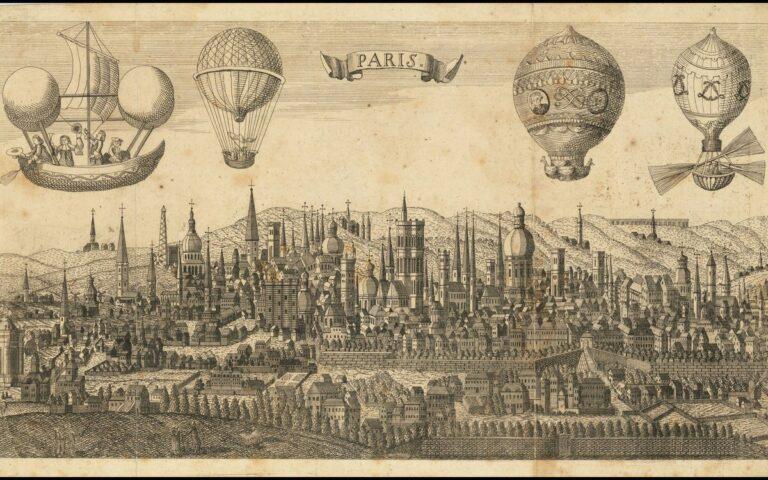
The first free flights had happened in 1783, when the Montgolfier brothers sent a hot air balloon over Paris and Jacques Charles followed with a hydrogen-filled version just days later. By the time the 1800s arrived, ballooning had already captured the public imagination, but the new century is when it truly matured. Aeronauts refined their craft, built sturdier baskets and envelopes, and turned balloon ascents into public spectacles that drew enormous crowds in cities from London to Philadelphia.
This period is often called the golden age of ballooning because it combined showmanship with genuine scientific curiosity. Pilots were part performer, part scientist, and part daredevil, and the public could not get enough of them.
Celebrity Aeronauts and Their Feats
A handful of names dominate any honest history of ballooning in this era. Jean-Pierre Blanchard, who had already crossed the English Channel by balloon in 1785, continued making ascents into the early 1800s and helped popularize ballooning in the United States with a flight in Philadelphia in 1793 that reportedly drew George Washington as a spectator.
Sophie Blanchard, Jean-Pierre’s widow, became one of the most famous aeronauts in Europe. She flew for Napoleon and later the Bourbon monarchy, staging nighttime ascents complete with fireworks launched from the basket. Her career ended tragically in 1819 when her balloon caught fire during a display over Paris, making her the first woman known to die in an aviation accident.
In Britain, Charles Green became the era’s most accomplished balloonist. He is credited with popularizing coal gas as a cheaper, more practical lifting gas than pure hydrogen, and in 1836 he piloted the Royal Vauxhall balloon on a legendary overnight flight from London to Weilburg, in the German state of Nassau, covering several hundred miles in a single trip that stunned the public with how far a balloon could travel.
Ballooning Crosses the Atlantic
American aeronauts had their own stars. John Wise spent decades flying across the eastern United States, experimenting with balloon design and advocating for transatlantic flight long before the technology existed to make it safe. His persistence and countless ascents made him one of the most recognizable figures in the American history of ballooning.
Balloon ascents became a fixture of state fairs, holiday celebrations, and traveling exhibitions. A pilot would announce a launch date, sell tickets or collect donations, and thousands would gather to watch the envelope inflate before an aeronaut climbed into a small basket and rose into the sky, often with no more guidance than the wind itself.
From Spectacle to Science and Strategy
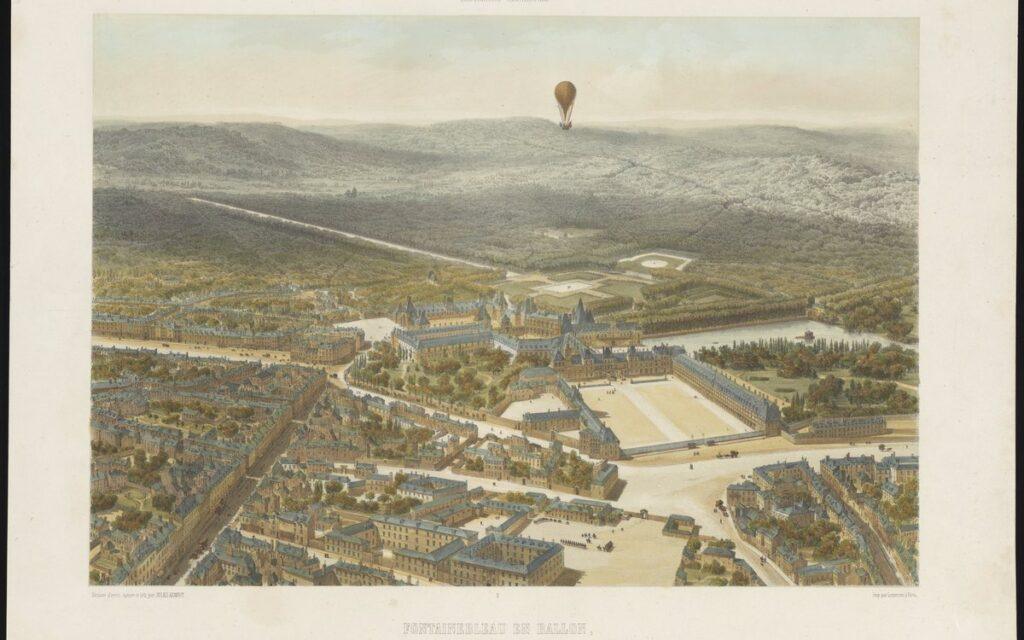
Balloons were not just entertainment. Scientists used them to study the atmosphere, and photographers used them to see the world from a wholly new angle. The French photographer and balloonist known as Nadar took some of the first aerial photographs from a tethered balloon over Paris in the late 1850s, opening an entirely new way of documenting cities and landscapes.
Militaries also took notice. During the American Civil War, Thaddeus Lowe organized a Union Army Balloon Corps, using tethered observation balloons to track Confederate troop movements and relay information back to commanders on the ground. A decade later, during the Siege of Paris in 1870 and 1871, balloons became a literal lifeline: crews used them to carry mail, officials, and passengers out of the besieged city when every other route was cut off.
What Made the Golden Age Possible
A few key developments allowed ballooning to flourish during this stretch of the 1800s:
- Better envelope materials, including varnished silk, that held gas more reliably than earlier fabrics
- Wider availability of coal gas in cities, which was cheaper to produce than pure hydrogen
- A growing culture of public exhibitions and paid spectacles that funded ambitious flights
- Increasing scientific interest in weather, altitude, and the upper atmosphere
- Early recognition of balloons’ military and journalistic value, which brought new funding and attention
Each of these threads fed into the next, and by the close of the century, ballooning had gone from a Parisian curiosity to a worldwide phenomenon with a rich and well-documented past of its own.
Why This History Still Matters at Wicked Balloons
We think about this history of ballooning every time we ready an envelope for a sunrise flight over Massachusetts. The basic principles have not changed. Warm air still rises, wind still sets the course, and the same sense of quiet wonder that captivated crowds in 1836 still greets our passengers at 500 feet today. If you want to learn more about our crew and how we carry that tradition forward, visit our about page to read about the people behind Wicked Balloons.
Frequently Asked Questions
When exactly was the golden age of ballooning?
Most historians point to the period from the early 1800s through the 1870s, when balloon technology matured, celebrity aeronauts toured widely, and balloons found practical use in science, journalism, and warfare.
Who were the most famous balloonists of the 1800s?
Sophie Blanchard, Charles Green, and John Wise are among the best-known names, alongside earlier pioneers like Jean-Pierre Blanchard who bridged the 1700s and 1800s.
Did balloons play a role in any wars?
Yes. The Union Army used a dedicated Balloon Corps for reconnaissance during the American Civil War, and balloons famously carried mail and passengers out of Paris during the 1870 to 1871 siege.
How does old-fashioned ballooning compare to a ride today?
The physics are the same, but modern equipment is far safer and more predictable. If you would like to experience the same slow, wind-driven flight that fascinated nineteenth-century crowds, take a look at our balloon rides over New England.
The nineteenth century turned a French curiosity into a worldwide fascination, and its aeronauts left behind a legacy of daring, discovery, and quiet beauty that still lifts us off the ground today.