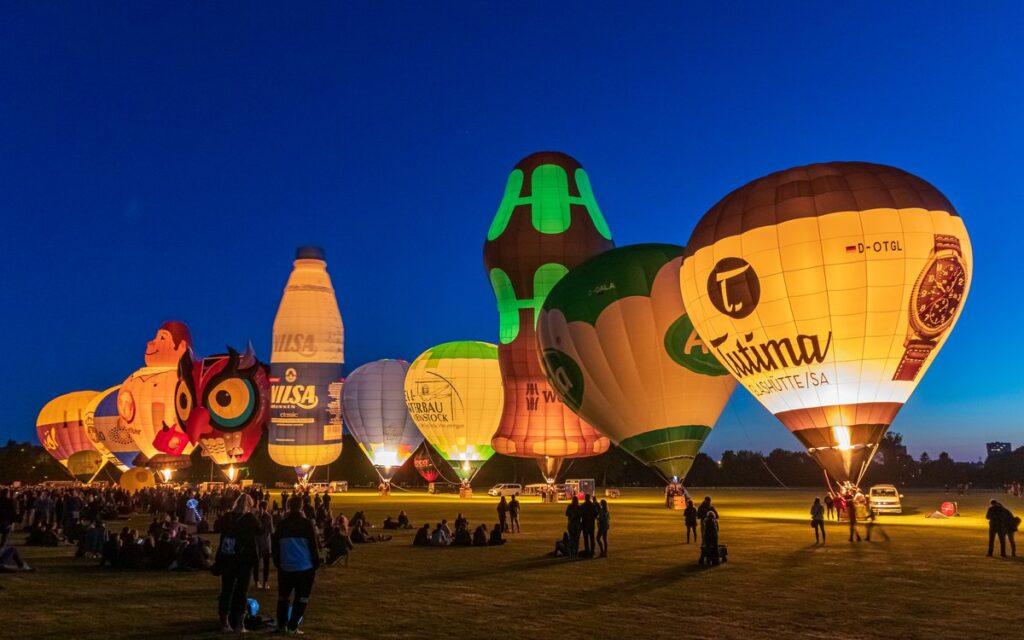
Picture a dark field at dusk, dozens of giant envelopes standing upright but going nowhere, each one flaring gold and orange from the inside like a paper lantern the size of a building. That’s a hot air balloon glow, and if you’ve never seen one in person, no photo really does it justice. It’s one of the most beloved rituals in ballooning, and it happens without a single balloon ever leaving the ground.
At Wicked Balloons, we get asked about balloon glows constantly, usually by people who saw one at a festival and want to know how it works, whether it’s dangerous, and why the balloons just sit there lit up instead of flying. Here’s everything you need to know.
What a Hot Air Balloon Glow Actually Is
A balloon glow is a nighttime event in which hot air balloons are inflated and tethered to the ground, then their pilots fire the burners in short, timed bursts so the fabric lights up from within. The balloons stay anchored the entire time. There’s no ascent, no flight path, no wind concerns in the way a sunrise or sunset flight would have them. The whole point is the visual: a field full of illuminated balloons glowing against the night sky, synchronized or staggered depending on how the event is run.
Because nothing actually flies, a hot air balloon glow can happen in conditions that would ground a normal flight. Pilots don’t need calm winds aloft or a clear flight corridor. They just need enough space to safely inflate and enough crew to keep each balloon tethered and stable while the burners work.
How a Balloon Glow Comes Together
Setting up a glow takes almost as much coordination as a flight, just aimed at a different outcome. The basic sequence looks like this:
- Balloons are laid out and inflated with cold air from portable fans, same as the first stage of any launch.
- Pilots apply short bursts of heat to bring each envelope upright, then keep it standing with brief, repeated burns.
- Ground crews hold tether lines at the base to keep the balloon from drifting or tipping in any breeze.
- As darkness falls, the burner flashes light up the nylon from the inside, and the effect grows more dramatic with every passing minute.
Many events also choreograph the burns, having every pilot fire in sequence down the field so the light seems to ripple from one end to the other, or having everyone light up at once on a signal for one big synchronized flash. Either way, it’s a striking thing to watch build from a quiet field of half-inflated fabric into a glowing skyline of balloons.
Why Pilots and Crowds Both Love It
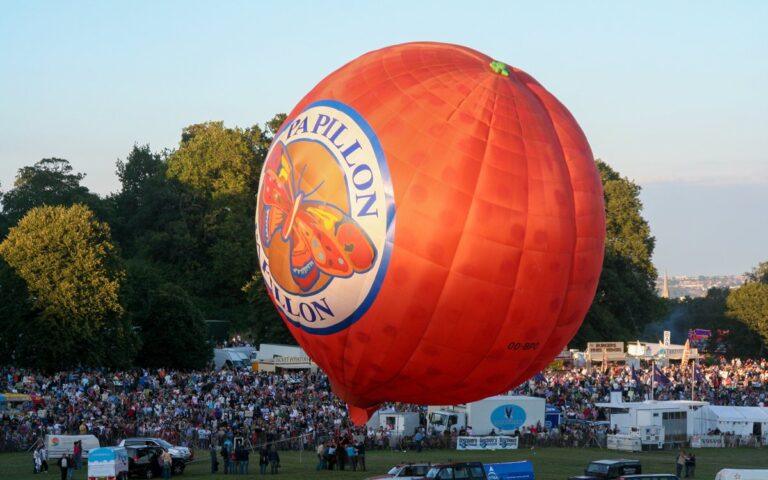
For spectators, a hot air balloon glow is simply gorgeous, and it’s approachable in a way flights aren’t. You can walk right up between the balloons, feel the heat from the burners, and get a close look at envelope artwork and patchwork that you’d normally only see from a distance in the sky. Kids especially love wandering the field at a glow, and it photographs beautifully in the golden hour and into full darkness.
For pilots and crews, a glow is lower-stress than a flight in some ways and more demanding in others. There’s no worry about landing sites or shifting winds, but standing a balloon upright and holding it steady for an extended period, often for a crowd, takes real technique and teamwork. It’s also a chance to show off envelope designs that fly past too quickly to appreciate in the air. Special shapes and custom advertising balloons in particular tend to steal the show at a glow, since the crowd gets minutes to study the artwork rather than a few seconds as it passes overhead.
A Tradition Rooted in Festival Ballooning
Balloon glows became a signature feature of large hot air balloon festivals starting in the 1970s and 1980s, as events like the Albuquerque International Balloon Fiesta grew into some of the largest ballooning gatherings in the world and began building nighttime programming around static, glowing balloons. The format spread quickly because it solved a real problem: festivals wanted an evening spectacle that didn’t depend on flying weather, and a field of glowing balloons turned out to be just as memorable as a mass ascension at dawn.
Where You Can See One in New England
New England has its own strong balloon festival tradition, and glows are a fixture of that scene each summer and early fall. If you want to see the effect for yourself, keep an eye on regional festival schedules, since most multi-day hot air balloon events in the Northeast include at least one evening glow alongside their sunrise flights.
If a glow gets you hooked on the idea of ballooning, the natural next step is going up yourself. Our sunrise balloon rides across central Massachusetts give you the flying half of the experience, calm morning air, wide views over New England, and a gentler introduction to the sport than a crowded festival field. You can browse photos from past flights and events in our gallery to get a feel for both sides of it, the quiet morning flights and the glowing evening gatherings.
Frequently Asked Questions
Do the balloons fly during a balloon glow?
No. The balloons stay tethered to the ground throughout a glow. The event is entirely about the lighting effect from the burners, not flight.
Is a balloon glow dangerous?
A well-run glow is safe for spectators and crews alike. Ground crews keep each balloon tethered and stable, pilots control the burner bursts carefully, and organizers typically rope off a safe walking area between balloons so guests can get close without getting in the way of the lines or the flame.
What’s the best time to arrive for a hot air balloon glow?
Arrive while it’s still light out so you can watch the inflation process, then stay as the sky darkens. The glow effect is subtle at dusk and becomes dramatic once it’s fully dark, so the best photos and views usually come twenty to thirty minutes after sunset.
Can any hot air balloon do a glow, or does it need special equipment?
Any standard hot air balloon and burner setup can participate in a glow. No special equipment is required, though some pilots and crews add lighting or music choreography as part of a larger festival production.
A hot air balloon glow is proof that ballooning doesn’t need a clear flight plan to be worth watching. Whether you catch one at a regional festival this season or decide to book a morning flight of your own, it’s a beautiful reminder of just how much presence these enormous, gentle machines have, even when they’re standing still.