Ask any pilot why do hot air balloons fly in the morning and you’ll get the same answer, delivered with a knowing smile: because that’s when the sky finally sits still. Long before dawn, our crew is already loading the trailer, checking wind reports, and watching the eastern horizon for the first hint of light. It isn’t a scheduling quirk or a marketing choice. It’s physics, and it’s the single biggest reason a sunrise flight over Worcester County feels so calm, so clear, and so unforgettable.
Why Do Hot Air Balloons Fly in the Morning? The Short Answer Is Air Stability
A hot air balloon has no rudder, no throttle in the usual sense, and almost no ability to fight the wind. It goes where the air takes it, which means the air has to be gentle and predictable for a flight to be safe. In the hour or two after sunrise, the ground and the air just above it are still cool and evenly matched in temperature from the overnight hours. That balance keeps the atmosphere smooth. There’s little to no turbulence, and winds tend to be light and steady rather than gusty.
As the sun climbs and the ground warms, that balance breaks down. Warm air rises off fields, parking lots, and rooftops in unpredictable bubbles called thermals. Thermals are wonderful for hawks and glider pilots looking for lift, but for a balloon they create bumpy, shifting conditions that make for a rough and less controllable ride. By mid-morning on a sunny day, the air over New England is often too active for comfortable ballooning.
The Evening Window, and Why Mornings Still Win
Balloonists do sometimes fly in the evening, once the sun is low again and the ground has started to cool. That window can offer similarly calm air. But sunrise has a practical edge: mornings are far more consistent day to day, especially through spring and summer when afternoon heat builds thermals that can linger into early evening. Morning air has spent all night settling down, while evening air is still shedding the turbulence of the day. That’s why the vast majority of scheduled balloon flights, ours included, happen in that first golden hour or two after sunrise.
What This Means for Wind
Wind speed and direction can shift meaningfully over the course of a day. Pilots check conditions well before a scheduled launch and again at the field, watching for the low, steady breezes that make for smooth flying. If the numbers don’t line up, a flight gets rescheduled rather than risked. This is also why we ask guests to keep their mornings flexible.
What Sunrise Ballooning Actually Feels Like
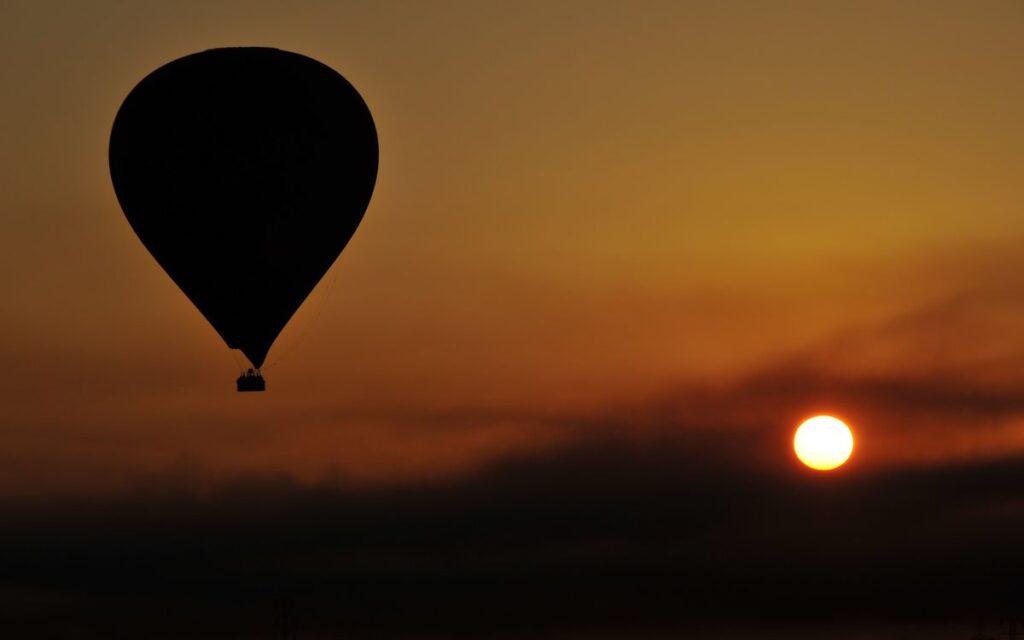
Beyond the technical reasons, there’s a simple experiential one: sunrise is beautiful, and gliding through it in a basket is unlike anything else. The light is soft and golden. Farmland, church steeples, and the Worcester hills below are still holding onto morning mist. Because a balloon moves at the same speed as the wind carrying it, there’s no rush of air past your ears, no engine noise. Passengers often describe the quiet as the most surprising part of the whole experience.
- Cool, comfortable air temperature before the day’s heat sets in
- Soft, low-angle light that makes for striking photos
- Wildlife more active and visible than at midday
- A genuine sense of stillness, since the balloon drifts with the breeze rather than against it
A Tradition Almost as Old as Ballooning Itself
Pilots have understood the link between calm air and safe flight since the earliest days of the sport. The Montgolfier brothers’ pioneering flights in France in 1783 kicked off a fascination with lighter-than-air travel, and as ballooning matured over the following two centuries, pilots learned through experience exactly when the atmosphere behaves and when it doesn’t. That accumulated knowledge is baked into modern training and is a big part of why hot air balloons fly in the morning as a matter of routine practice rather than preference.
How We Plan a Sunrise Launch
Every flight day starts with a weather briefing well before dawn. Our pilots look at surface wind speed, direction, and any signs of an unstable atmosphere developing early. If conditions look favorable, we confirm the launch site and time with guests, usually the night before or early that same morning. Because the calm window at sunrise is relatively short, timing matters. Guests who book a flight with us should expect an early alarm and a bit of flexibility, since we may need to adjust the date if the forecast shifts. You can see upcoming dates and start the process on our reservations page, where we outline what a typical morning looks like from meeting time to touchdown.
Frequently Asked Questions
Why do hot air balloons fly in the morning instead of the afternoon?
Afternoon air is usually too active. As the sun heats the ground through the day, it creates rising thermals and shifting winds that make balloons harder to control. Morning air, cooled and settled overnight, is calm and steady, which is exactly what a balloon needs.
Can hot air balloons fly in the evening?
Sometimes, yes. Evening flights can work once the ground begins cooling again after sunset. However, evening conditions are less consistent than morning conditions, so most commercial operators, including us, schedule the bulk of their flights at sunrise.
What happens if the weather isn’t right on my scheduled morning?
We reschedule. Pilot judgment always comes first, and no view is worth an unsafe flight. If wind or visibility isn’t cooperating, we’ll work with you to find the next available morning.
How early do I need to arrive for a sunrise flight?
Plan to meet our crew while it’s still dark or just barely light out, since setup, inflation, and the pilot’s final weather check all happen before the calm window opens. Specific meeting times are confirmed when you book your balloon ride.
There’s a reason the most magical hour to fly has stayed the same since the earliest days of ballooning. The sky simply cooperates best at sunrise, and that stillness is what turns a balloon ride into something you remember for years. We’d love to share one of those mornings with you.