Watch a hot air balloon inflate at sunrise and the first question almost everyone asks is the same one: how hot is a hot air balloon, really? The envelope towering above you is filled with air that’s roasting compared to the crisp morning chill outside, yet the ride itself feels calm, quiet, and surprisingly comfortable. The answer involves some straightforward physics, a carefully engineered fabric, and a pilot who is constantly making small adjustments to keep everything in balance.
So How Hot Is a Hot Air Balloon Inside?
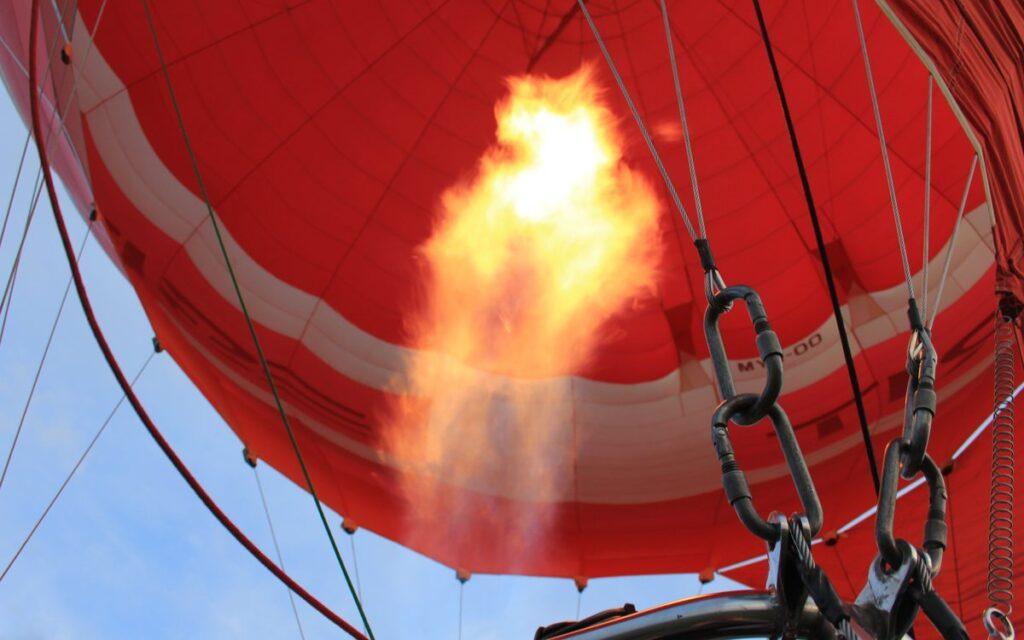
During a typical flight, the air inside the envelope runs somewhere in the neighborhood of 200 degrees Fahrenheit, give or take depending on the outside temperature, the balloon’s size, and how heavy the load is. That’s hot enough to make the nylon overhead feel warm to the touch near the top of the envelope, but it’s nowhere near as scorching as people often imagine. Propane burners can produce a flame well over 1,000 degrees at the nozzle, but that heat disperses quickly as it rises through tens of thousands of cubic feet of air, so what actually fills the balloon is a much gentler, evenly distributed warmth.
The basic principle is simple: hot air is less dense than the cooler air surrounding it, so a balloon full of heated air is lighter than an equal volume of ambient air. That difference in weight is what generates lift. The bigger the temperature gap between the inside and outside air, the more lift the balloon produces.
Why Pilots Don’t Just Crank Up the Heat
If more heat means more lift, why not just blast the burners and fly as hot as possible? A few good reasons:
- Fabric limits: The nylon or polyester envelope fabric is rated to handle sustained heat only up to a certain point before it starts to degrade faster than normal, so pilots stay well under that ceiling.
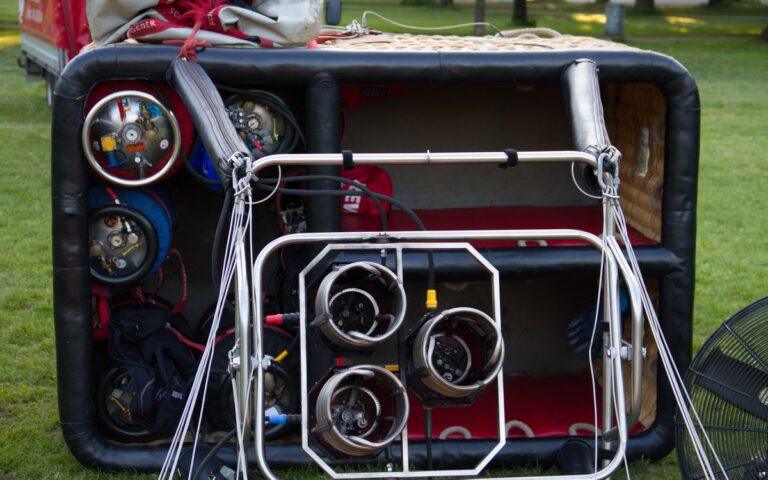
- Fuel efficiency: Propane is the balloon’s only fuel source, and a flight is only as long as the tanks allow. Flying hotter than necessary burns fuel faster and shortens the ride.
- Smooth control: Small, frequent bursts from the burner give a pilot far more precise control over altitude than a few enormous blasts of heat. Gentle adjustments are part of what makes a balloon ride feel so serene.
Because of these factors, balloons are flown at the minimum temperature needed to stay aloft and manage altitude for the given weight and conditions, rather than at some maximum possible heat.
What Changes the Temperature Needed
Ask “how hot is a hot air balloon” on a cold November morning versus a hazy August afternoon and you’ll get two different answers. A colder outside air temperature means the balloon needs less of a temperature difference to generate the same lift, so the burners don’t have to work as hard. On a warm day, the air inside has to be heated considerably more to create enough of a density difference to fly.
Altitude, humidity, and the total weight being carried (passengers, fuel, the balloon itself) all factor in too. A larger balloon carrying more passengers, like the ones used for sunrise balloon rides, needs a bit more heat than a small solo-pilot balloon to lift the same way.
Why Sunrise Flights Make Sense
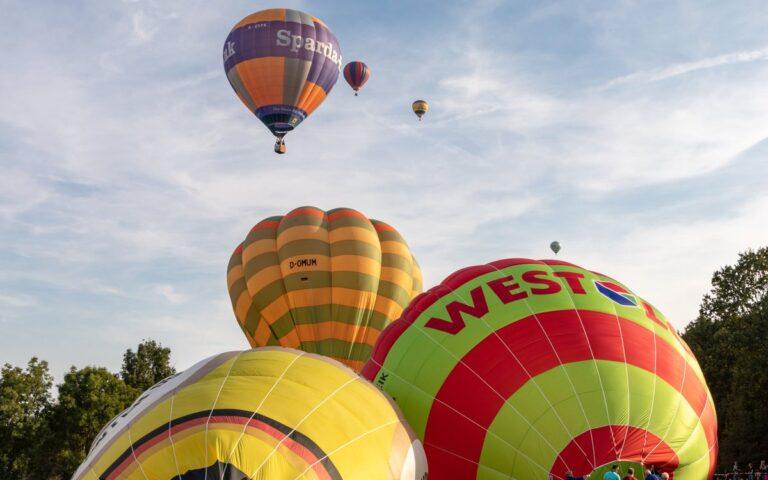
This is part of why balloon flights almost always happen at sunrise. Cool morning air is denser and calmer, which means less heat is needed for lift and the winds tend to be lighter and more predictable. As the sun climbs and the ground warms up, thermals and shifting winds make conditions less suitable for a smooth, controlled flight.
Staying Comfortable in the Basket
Passengers are often surprised that the basket doesn’t feel like a sauna. That’s because the heat is concentrated near the burners and the mouth of the envelope, rising upward into the balloon rather than radiating down onto the people below. You’ll feel a brief warm whoosh each time the pilot fires the burner, followed by a return to the ambient outdoor temperature. On a cool morning, that occasional blast of warmth is often a welcome bit of comfort rather than something to brace for.
Frequently Asked Questions
How hot does the air get inside a hot air balloon?
It generally stays around 200 degrees Fahrenheit during flight, though the exact figure shifts with outside temperature and the weight being carried. Pilots aim for the minimum heat needed to fly safely and efficiently, not the maximum the fabric can tolerate.
Does the burner flame itself get hotter than that?
Yes. The propane flame at the burner is far hotter than the air inside the envelope, but that heat spreads out and cools as it mixes with the large volume of air filling the balloon, so what you end up with overhead is a much more moderate temperature.
Can the balloon fabric be damaged by the heat?
Balloon envelopes are made from fabric specifically chosen to withstand normal flight temperatures with a wide margin of safety. Pilots and maintenance crews keep an eye on the fabric’s condition over time, and flights are flown well within the material’s rated limits.
Why do balloon rides happen so early in the morning?
Cooler, calmer morning air makes for easier, more predictable flying, since less heat is needed for lift and winds are typically lighter before the sun warms the ground. It’s one of the reasons most balloon flight reservations are scheduled around sunrise.
Next time you watch a balloon glow against the morning sky, you’ll know there’s real science behind that warm orange light: a careful balance of heat, air density, and a pilot’s steady hand on the burner, all working together to lift you gently off the ground.