Here’s a question every one of our sunrise passengers asks somewhere over the fields of central Massachusetts: how do you steer a hot air balloon without a wheel, a rudder, or anything resembling a steering column? There isn’t one, and that’s not an oversight. A hot air balloon has no steering mechanism at all, and yet experienced pilots land within feet of a chosen spot. The answer has everything to do with altitude, patience, and a working knowledge of the sky.
There Is No Steering Wheel, and That’s the Point
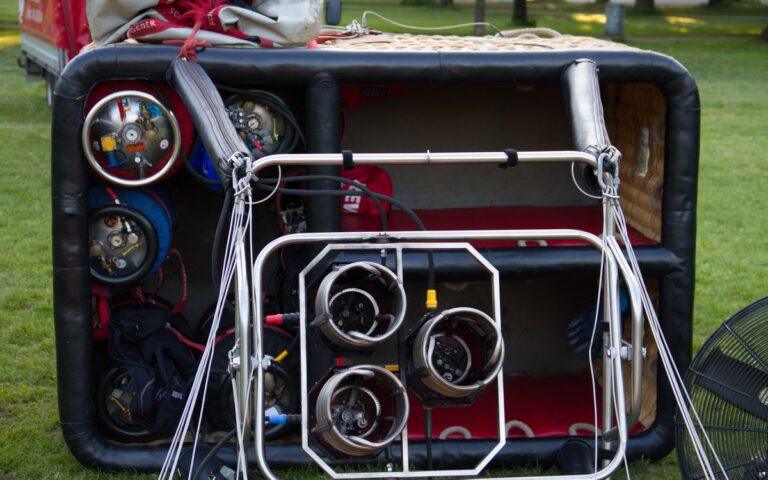
A hot air balloon moves exactly where the wind takes it. The wicker basket has no rudder, the envelope has no ailerons, and there’s nothing resembling a joystick. What the pilot does control is the burner, which heats the air inside the envelope and determines whether the balloon climbs, descends, or holds steady at a given altitude.
That single control turns out to be surprisingly powerful, because wind rarely blows the same direction at every altitude. Layers of moving air stack on top of each other like slow-moving rivers, often just a few hundred feet apart, and each layer can carry the balloon on a slightly different heading.
How Do You Steer a Hot Air Balloon by Changing Altitude?
This is the real answer to how do you steer a hot air balloon: pilots read the wind at different heights and move the balloon up or down into the layer that’s heading the way they want to go. Climb a few hundred feet and the wind might shift ten or fifteen degrees to the right. Descend toward the treetops and it might swing back to the left, or slow down entirely.
Before a flight ever leaves the ground, a pilot has already studied wind forecasts at multiple altitudes to build a mental map of the morning’s air. Once aloft, that plan gets tested and adjusted flight by flight, foot by foot, using nothing more than the burner and a keen eye on the horizon.
- Burner blasts heat the air inside the envelope, making the balloon rise.
- Cooling happens naturally as the air inside loses heat, causing a gentle descent.
- A parachute vent at the top of the envelope can be opened briefly to release hot air and descend faster when needed.
- Reading the ground — smoke, flags, treetops, even ripples on a pond — tells the pilot what the wind is doing at lower altitudes before committing to a descent.
Why Balloonists Chase the Wind Instead of Fighting It
Early balloonists learned this lesson the hard way. The Montgolfier brothers launched the first untethered hot air balloon flight over Paris in 1783, and every pilot since has worked within the same basic rule: the balloon goes where the wind goes. Rather than treating that as a limitation, experienced pilots treat it as the whole game. Steering a balloon isn’t about forcing a direction, it’s about finding the direction that’s already available and riding it well.
That mindset shapes everything about how a flight is planned and flown. Pilots don’t pick a destination and muscle their way there. They study the morning’s conditions, choose a launch site that sets up favorable options, and stay flexible about where the flight will actually end.
The Skill Is in the Anticipation
A good pilot is always thinking two moves ahead, the way a chess player reads the board rather than reacting to the last move. Long before it’s time to land, a pilot is already scouting open fields, watching for power lines, and testing altitude changes to see how the balloon responds. That’s the craft passengers rarely notice from the basket, but it’s exactly what turns “wherever the wind blows” into a landing that’s calm, controlled, and often right where the chase crew is waiting with the van.
What This Means for Your Ride
Because the flight path depends on the wind rather than a fixed route, no two sunrise balloon rides ever look quite the same. One morning might carry you low over a reservoir and up along a ridge line; another might drift you gently across farmland with barely a sound but the occasional burner. That unpredictability is part of the appeal. You’re not touring a route, you’re following the air itself, with a pilot who is reading it constantly on your behalf.
It’s also why our flights launch at sunrise. That’s typically when the atmosphere is calmest, with the gentlest and most predictable wind layers of the day, giving pilots the cleanest conditions to work with and passengers the smoothest ride.
Frequently Asked Questions
Can a hot air balloon fly against the wind?
Not directly. A balloon always moves with the air surrounding it, so it can’t fly upwind the way an airplane can. What pilots can do is find a different altitude where the wind is blowing in a more favorable direction, which is often enough to adjust the balloon’s course meaningfully over the course of a flight.
How do you steer a hot air balloon to a specific landing spot?
Pilots watch the wind at multiple altitudes throughout the flight and gradually work the balloon toward layers that carry it near a suitable open field. As the ground gets closer, they fine-tune descent speed with the burner and vent to set down as gently and precisely as conditions allow.
Does the pilot have any horizontal control at all?
Only indirectly, through altitude changes. There is no rudder or propeller providing sideways thrust. All horizontal movement comes from the wind itself, which is why understanding how wind behaves at different heights is one of the most important skills a balloon pilot develops.
Is it safe if the balloon can’t be steered directly?
Yes. Pilots plan flights around forecasted wind conditions and maintain constant awareness of terrain, obstacles, and landing options throughout the flight. The lack of a steering wheel doesn’t mean a lack of control, it just means the control works through altitude rather than direction.
Understanding how a balloon moves through the sky only makes the experience richer once you’re the one riding in the basket, watching the pilot read the wind in real time. If you’d like to see it firsthand, you can check available dates and book a flight for an upcoming sunrise.